- Typical EMG quality, consistent, unique and ready to go
- These offer a very unique vntage-voiced guitar tones while being active pickups
- So much fun to play
- Difficult to find 7-string version as a retail item
- Since they have their own sound, it's not for everyone
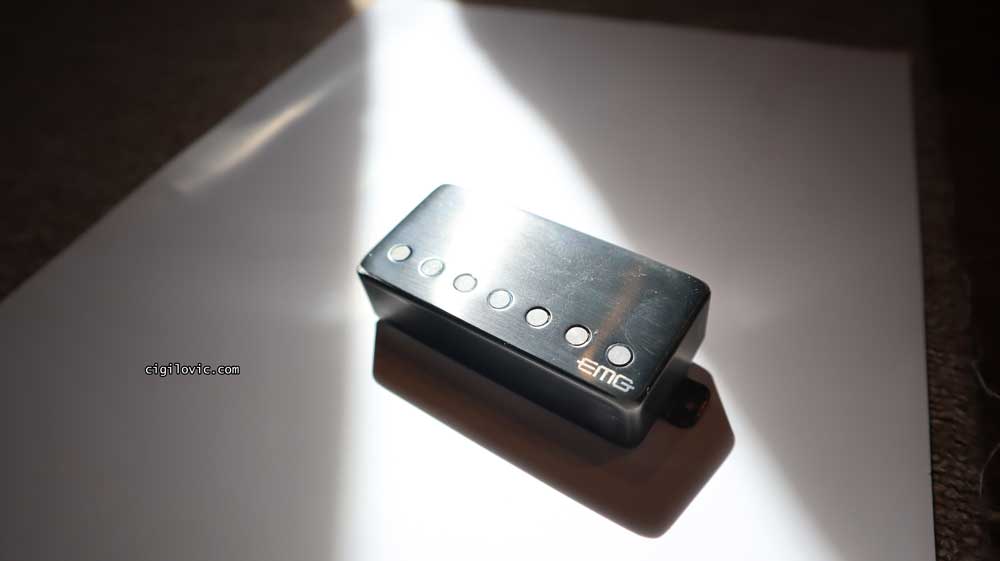
Hello there, back again with another guitar pickup review for you! This time, we will be looking at the EMG 57/66 pickups (7 string, 7H)! As many of you know, EMG Pickups is an American guitar pickup manufacturer and is probably the first brand that comes to one’s mind when active pickups are mentioned!
Table of Contents
What is an Active Pickup?
Active pickups are guitar pickups that are powered by a 9V battery. They are designed to ensure a noiseless operation and a low-impedance signal without any loss of signal transmission, regardless of the cable length. Active pickups generally tend to sound louder, clearer, and fuller, but also feel a bit more compressed.
Are Active Pickups Bad?
As you may have already discovered on the internet, there are countless discussions about passive pickups being superior to active pickups. However, it’s just a personal choice, and wise guitarists don’t classify guitar pickups this way; instead, they take these as tools to shape their sound for a specific purpose. In my opinion, both are awesome, but they are only different from each other. If you want to play with high-gain settings and want a solid, tight feel while having no noise at all, active pickups are excellent. On the other hand, passive pickups can also handle a lot of gains and they are almost perfect for any musical scenario as well.
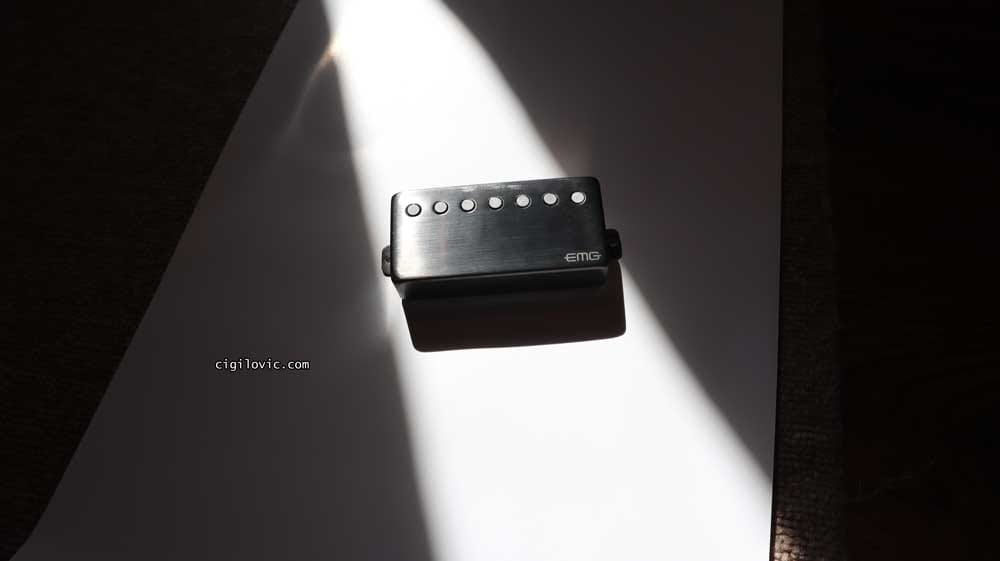
Active pickups vs Passive pickups
Passive guitar pickups can be considered the standard when it comes to electric guitars. These pickups are made of magnets wrapped with copper coils around them. So when you hit a string, it interferes with the magnetic field and converts this into an electric signal. Even though passive pickups usually generate less volume than active pickups, it all depends on the magnet type and the number of coil wraps. Their dynamic range is pretty big compared to active pickups; however, they are also more sensitive to electrical and magnetic interference. Especially single coils can generate a lot of hum and feedback under high-gain settings. On the other hand, humbuckers can handle noise issues pretty well these days. 
Active pickups are manufactured the same way but with less coil wrapping. The signal generated by the pickup is then boosted in the built-in preamp that operates with a 9V battery. Surprisingly, active pickups are almost the standard for bass guitars. As electric guitars are becoming more popular every day, we can easily claim that they are less favoured by guitarists. The lower number of coil wraps will naturally generate a low output. This actually helps to have less interference, thus almost no hum or unwanted feedback. Since this signal is boosted by the preamp section, active pickups generally sound way louder than passive pickups. This boosting also compresses the signal, so you end up with a smaller dynamic range. 
EMG Active Pickups
To be honest, before I worked in the musical instruments industry, I had very little playing experience with active pickups. But during my service, I had the chance to play and test many guitars with active pickups. I played EMG 60, 81, 85, 89 and single-coil SA pickups on various guitars as well as Schecter‘s own Diamond series active pickups. I was recording at least hour-long videos using a Marshall JVM205C guitar amp, and I can remember the confidence in my playing when I switched to high gain settings. They definitely help with obtaining a high amount of overdrive and distortion without having too much noise, as well as providing a compressed tone so that I was able to play more difficult passages easily.
Whenever I played power chords, muted or open, I was able to feel the power of these active pickups. Contrary to popular belief, they did sound very good in clean settings as well. Especially, we had received a lot of positive comments on the Schecter Hellraiser C-1 review video, mentioning they never expected active pickups would sound so cool with clean settings.
Check out my Schecter Hellraiser C-1 review here

EMG 57/66
Having said that, I had never owned a guitar with active pickups nor played EMG 57/66 before! I was looking for a modern metal axe and fell in love with the Schecter Hellraiser Hybrid PT-7 electric guitar. Since there was not much online material available on this instrument, I had to trust my experience with Schecter and EMG Pickups and I went for it!
Check out my Schecter Hellraiser Hybrid PT-7 review here
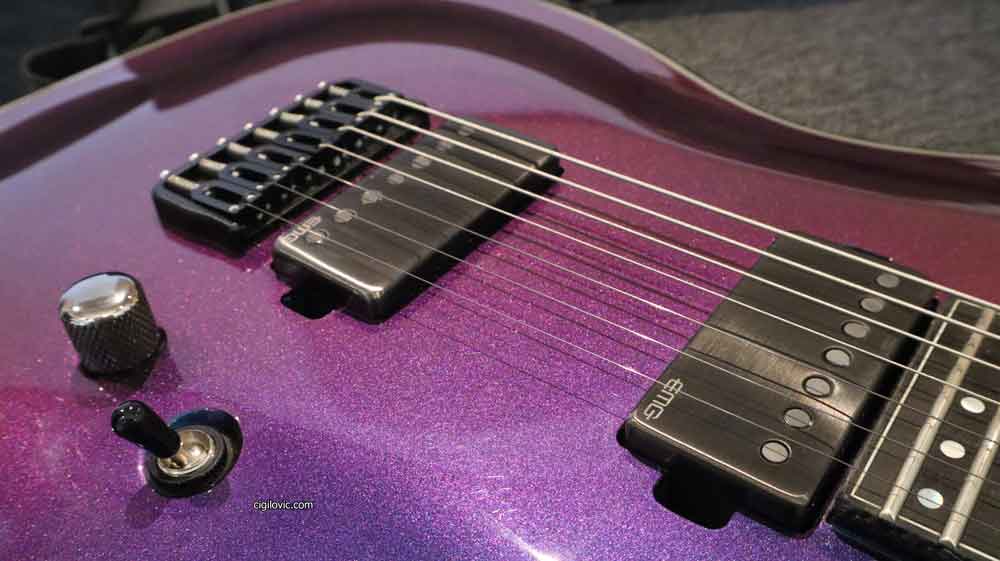
Before I provide you with an EMG 57/66 7H review video, I would like to show you the tech specs briefly here.

Tech Specs
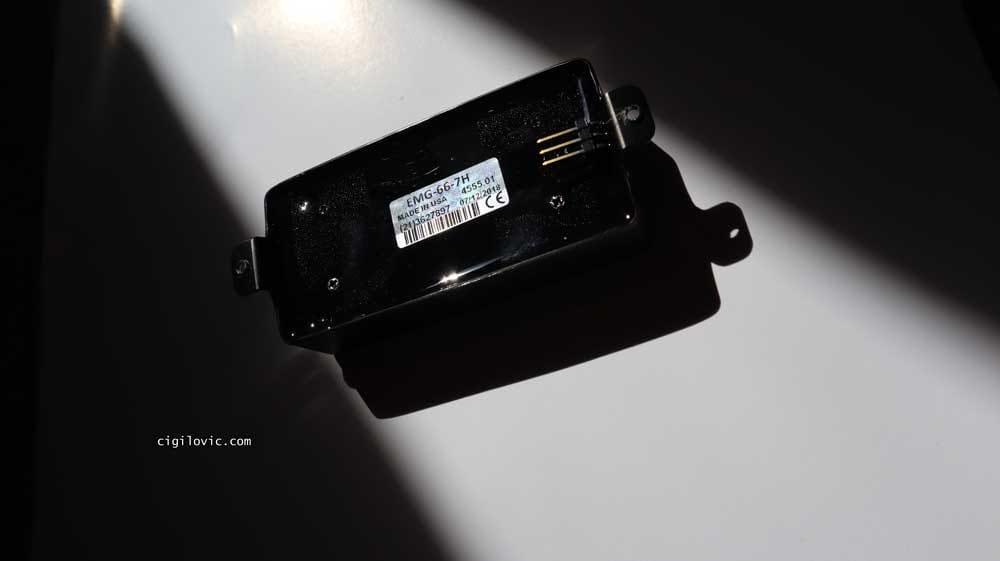
| Model | 57 7H | 66 7H |
|---|---|---|
| Magnet type | Alnico | Alnico |
| Resonant Frequency (kHz) | 2.11 | 1.61 |
| Output Voltage (String) | 3 | 3 |
| Output Voltage (Strum) | 4.5 | 4.5 |
| Output Noise (60 Hz) | -100 | -100 |
| Output Impedance (kOhm) | 10 | 10 |
| Current @9V (Microamps) (Set) | 400 | 400 |
| Battery Life (Hours) (Set) | 600 | 600 |
| Maximum Supply (Volts DC) (Set) | 27 | 27 |
Sound Demo (no talking)
As I always do, I have prepared a video for you! I used the following signal chain.
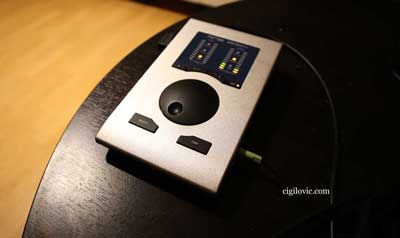
Schecter Hellraiser Hybrid PT-7 > Cordial CSI 6 PP Silent 6m > ENGL E570 > EBS PG-58 Flat Patch Cable Gold > ENGL Cabloader > Cordial CSM 2,5 FM GOLD 250 > RME Babyface PRO > Reaper > Valhalla Vintage Reverb

Unlike my experience with EMG active pickups, I must say EMG 57/66 sounds very different and unique! I can still feel and hear a lot of compression effect, and the fact that these are active pickups, but they sound very open and almost feel like a very good combination of traditional passive humbucker sounds with an active pickup vibe. Both 57/66 feature Alnico V magnets and have very pronounced yet smooth mid frequencies. They can easily get into overdrive but still retain the chime and clarity.
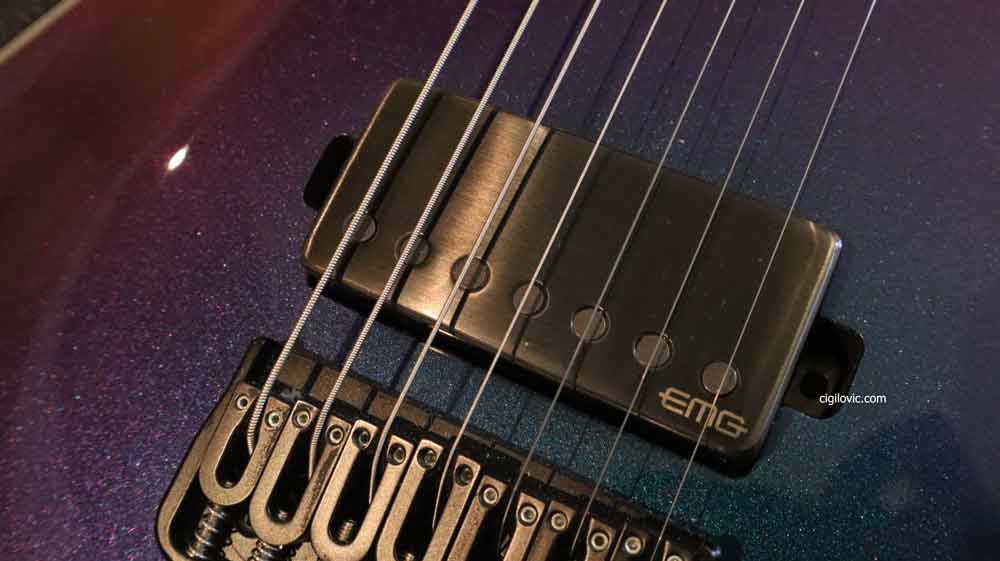
In order to show you all possible sounds in a short video, I used the clean channel as well as a boosted clean channel. This clearly shows that it can get overdriven in a matter of seconds, but it is still very pleasant to the ears. Drive characteristics complement Schecter’s acoustic qualities. As you can also hear in the video, in crunch settings, it offers a traditional rock sound without a problem.
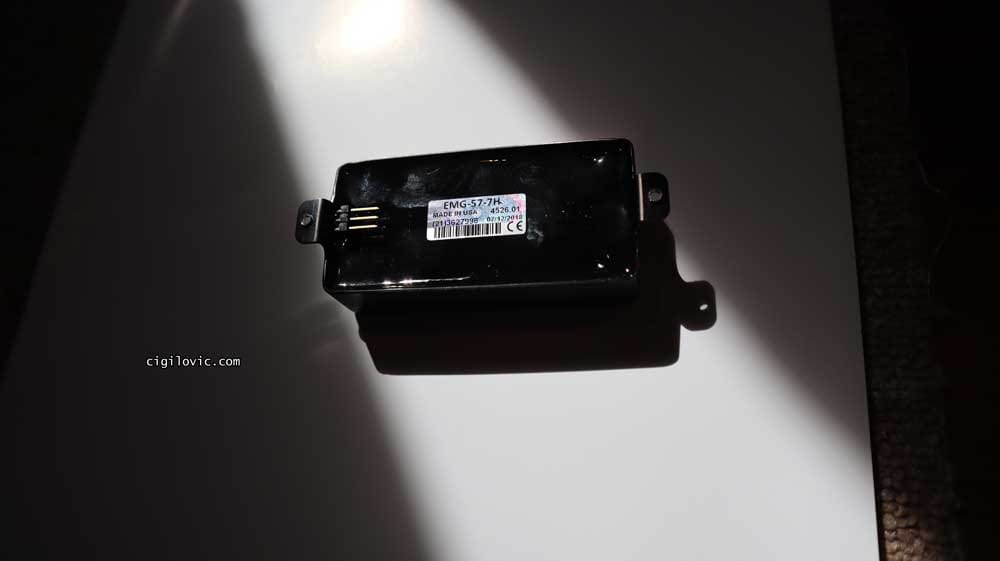
These pickups can handle a lot of gain by the way (naturally!) Out of my three guitars (single coils, passive humbuckers), the EMG 57/66 can handle the maximum amount of brutal gain generated by the ENGL E570 with a very low amount of gain. Traditional pickups already give in at full gain settings, let alone hi-gain switch is engaged. 
As I have mentioned, out of all EMG active pickups I experienced, EMG 57/66 is in another league. I think it offers a great balance between the active pickup vibe and traditional sound characteristics. I absolutely recommend anyone to try these out if you can! There are many electric guitars on the market that feature EMG 57/66 sets, so you don’t actually have to modify your guitar. It’s best to try these modern metal machines and experience this pair of pickups first!
Check out electric guitars featuring EMG 57/66 active pickups here
Update: One thing I would like to mention is that while attempting to adjust pickup heights, EMG pickup screws got worn out very quickly. Especially the screw that belongs to the neck pickup, the bass side went really quickly. In order to fix that, I got Göldo humbucker screws that really fit well in this guitar.
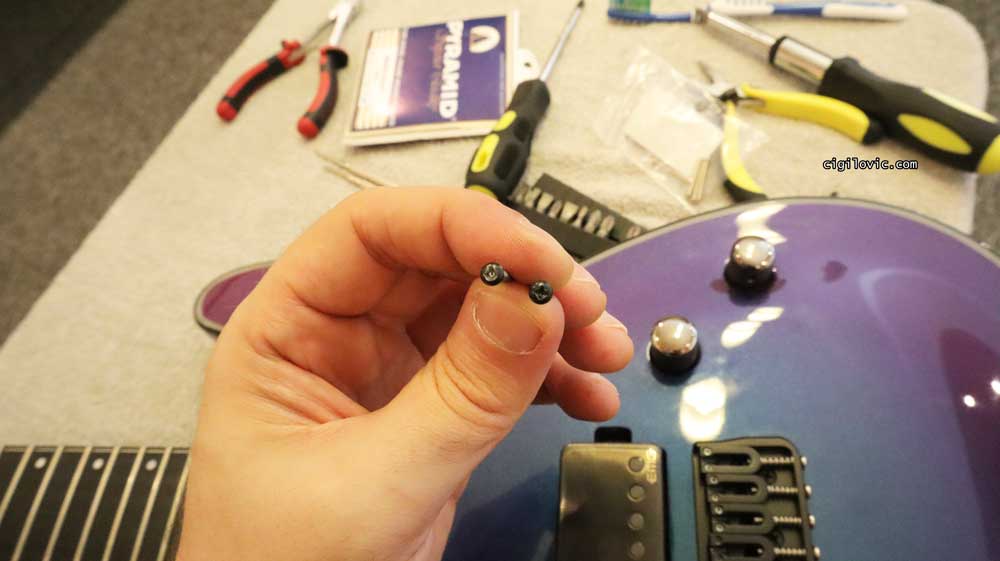
However, the problem wasn’t about EMG pickup screw quality; it was rather the design that they implemented in the screw holes. I’m not sure if this was the intended design, but it definitely created issues, and I also had the same experience with Göldo humbucker screws.
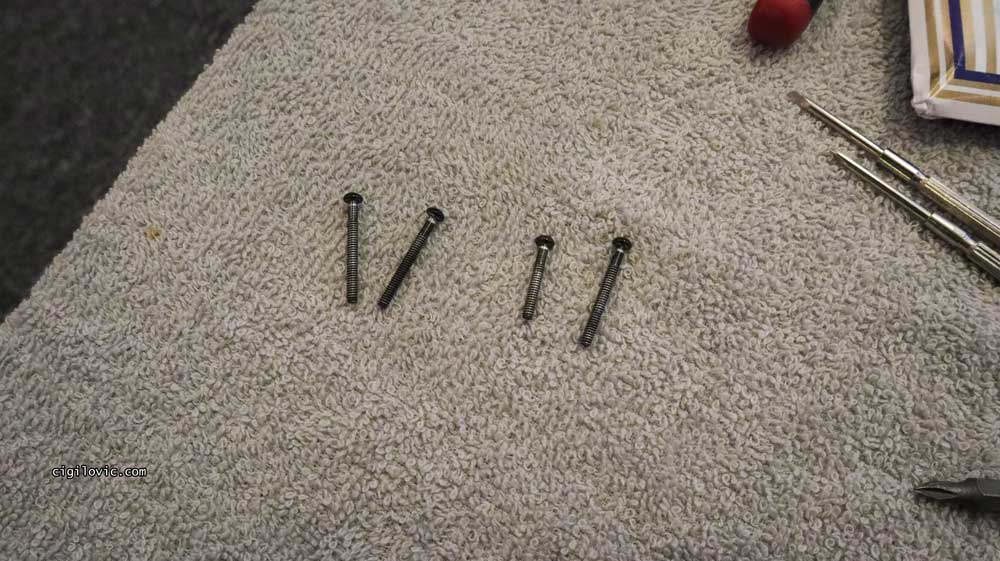
As you can see, the one that belongs to the neck pickup (on the bass side) is shorter! I have no idea why, and it was actually the one that went bad quickest. I was also concerned that it might be related to variations in body thickness on the back of the guitar. So I really carefully tested Göldo humbucker screws and checked how far they can be pushed into the threaded holes underneath the pickup mounting holes. Fortunately, Göldo humbucker screws had no problem reaching the bottom. However, I encountered another problem. The problem is the inconsistency with the screw holes on the pickups themselves. Meaning that, on one pickup, on one side, the screw hole on the pickup is threaded, and on the other, it is not threaded. I have no idea why this was designed that way in the first place, or if this was a manufacturing error. But it creates a problem.
As you tighten the screws, the rubber paddings underneath the pickups are squeezed so they hold the pickup at a certain height. However, in order to achieve that, you need to press the humbucker and keep tightening. With the unthreaded screw hole, it goes perfectly. But with a threaded screw hole, once you press the humbucker, that side of the pickup gets stuck because of the threads, and with the increased opposing forces, you need to apply more force to tighten the screw. This results in a quickly worn-out screw thread. And believe it or not, I messed up one Göldo humbucker screw that belongs to the neck pickup (bass strings) again, just like the initial problem! So to me, this looks like EMG’s problem and has nothing to do with Schecter or Göldo humbucker screws. Not sure if any of you have experienced such a problem.
Check out my Göldo humbucker screw review here

Pricing & Availability
Interestingly, EMG57/66-7H, the 7-string version, is very, very difficult to supply separately. There are some Schecter and ESP guitars featuring this set. But it’s very difficult to find these pickups for an upgrade project. However, the EMG 57/66 pickup set is widely available in many finish options, literally in any music store online.
Check out EMG 57/66 pickups on Thomann here
There are also many resellers on Reverb featuring this pickup set. The 7-string version rarely pops up there.
Check out EMG 57/66 pickups on Reverb here
Last but not least, Amazon surprisingly offers a lot of EMG products, including a 57/66 set too!
Check out EMG 57/66 pickups on Amazon here
I hope you have enjoyed this article and the video! Thanks for visiting my blog and supporting me so far! I will hopefully see you in the next review here!