- Extremely well-made audio interface that offers unmatched long term stability
- Superb audio quality
- Stable AF drivers
- Crystal clear preamps and audio signal at all times
- On board DSP featuring sweet reverb and EQ
- No cons, just get this audio interface and thank me later
Hello there, back again with a piece of news this time! Many of my visitors have already read my RME Babyface PRO Review. It’s been one of the best-performing reviews on my website; many thanks! As I mentioned in that review, I have been a big fan of the RME brand and appreciate their quality products and how they approach designing their audio interfaces. While I was regularly checking their website and their social media accounts, I noticed they have just released a new version of RME Babyface PRO, this time called RME Babyface PRO FS.
Table of Contents
My original RME Babyface PRO Review article was shared by RMA on social media, and they mentioned, “Some people might think it’s an expensive interface, but actually, it’s not! You are paying for the stability, support and hassle-free use, and you are paying for these to last 5-8 years!“ part! I was really glad because this is what I was aiming to project to my readers.
Please consider supporting this blog by buying your gear from Thomann using my links at no extra cost to you, many thanks!

RME Babyface PRO FS
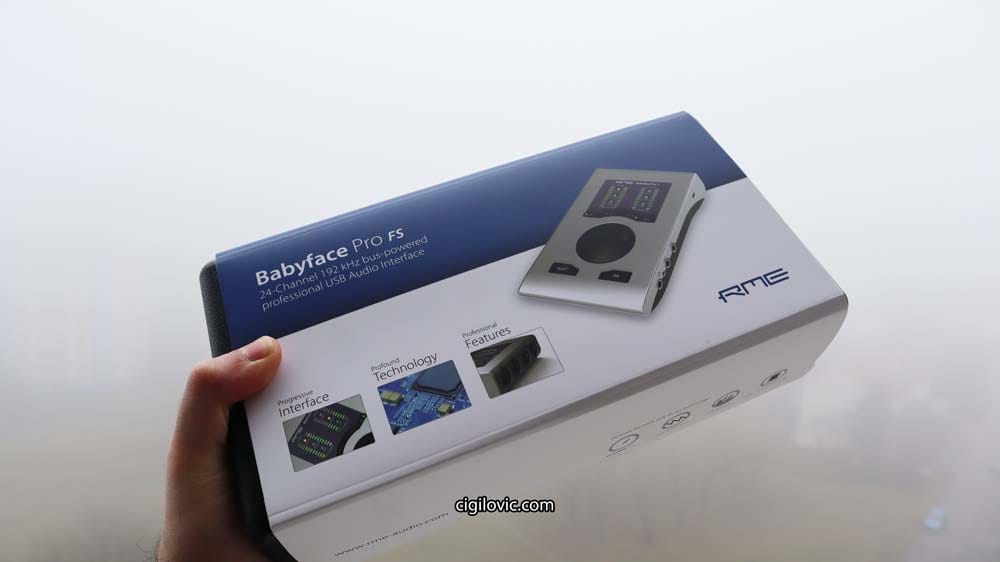
Enter Babyface PRO FS! As you may see, it’s 99% identical in terms of experience, handling, format and functions, with a little bit more precision and fine-tuning. The packaging and the box content are identical, with just the addition of the “FS” name. The packaging features an outer layer which consists of all the printed information. This layer hugs the case while also housing the thick manual placed at the bottom part.
It comes in a sturdy case, just like the original Babyface PRO. I always really liked how RME would offer all of these details for a reasonably fair-priced item.
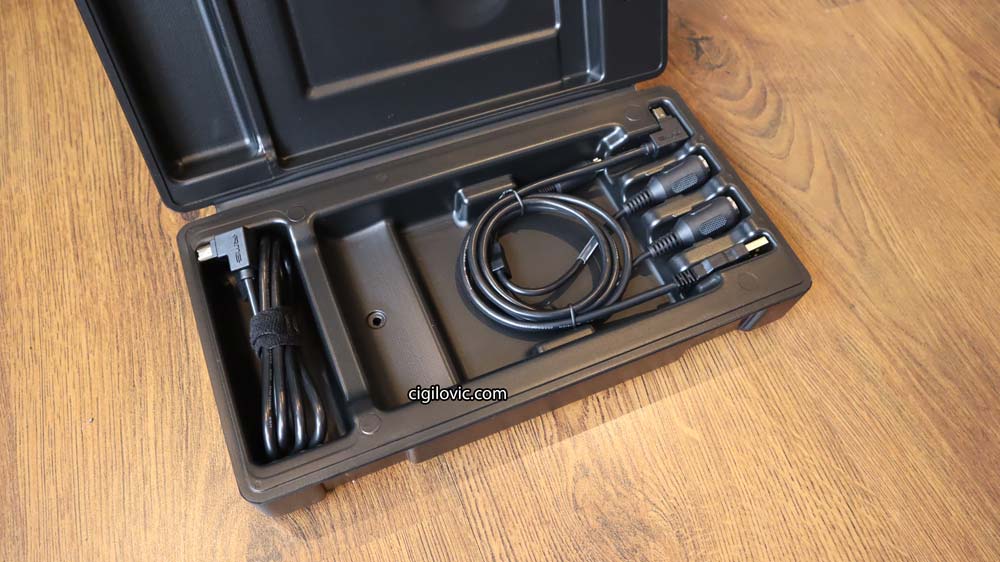
The case is very smartly designed and structured. It can house not only the audio interface but also the cables and connectors that come with it. As you can see, there are two right-angled cables here in the image below. The one in the separate section (left) is a USB-C version of the main connector cable. There’s also a standard USB 2.0 cable. The audio interface is covered with a fine pouch in black.
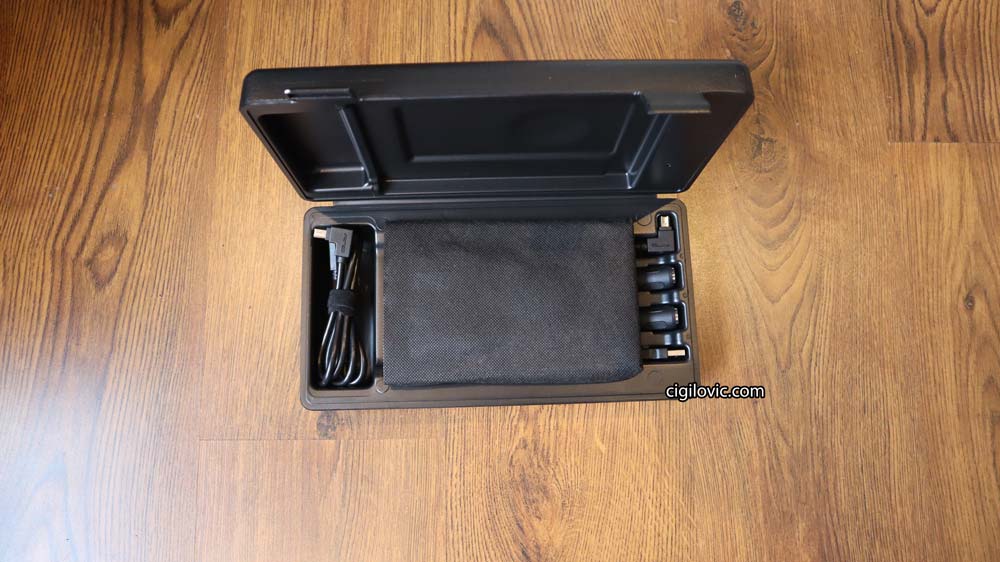
There’s also the MIDI I/O breakout cable. Please see the photo below and just appreciate the cool design thinking for the box and the box content! I must say the box itself is way lighter than the outer packaging plus the thick manual! 🙂
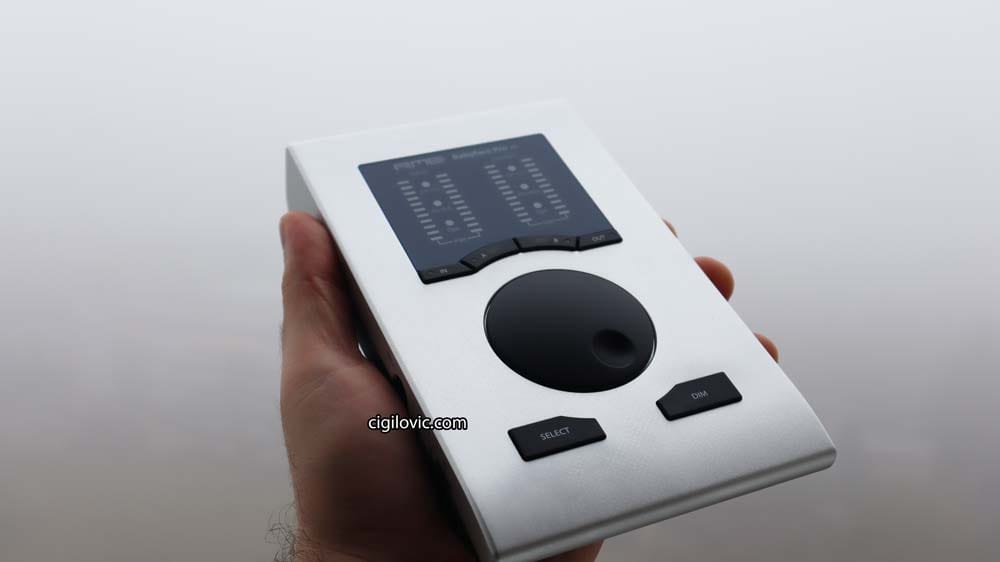
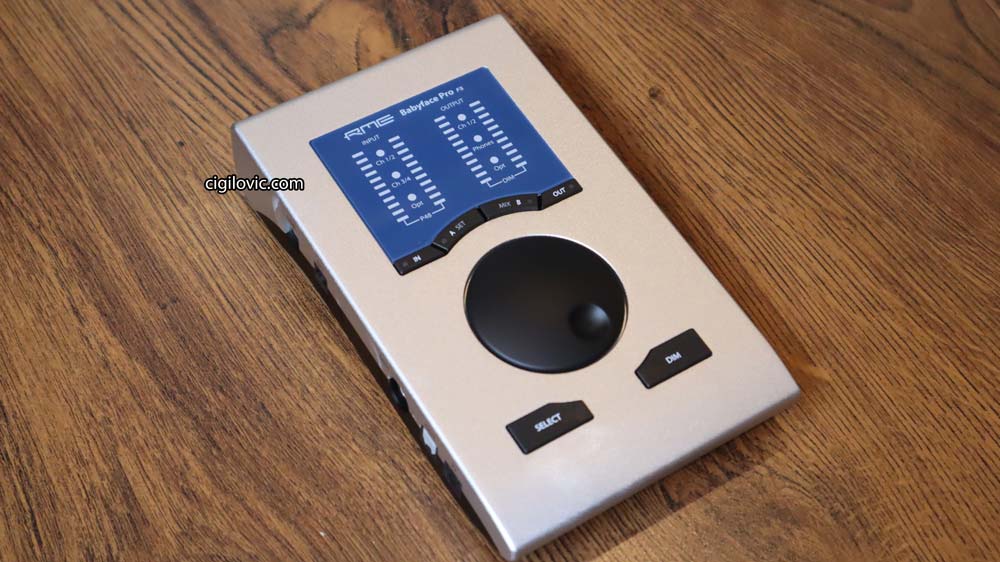
The front side of the Babyface PRO FS is identical to the previous version. It has very nicely coloured meters which you can select based on your needs at the moment. The top of the Babyface PRO FS features a high-precision rotary encoder, 6 buttons, 4 LED bands and 6 status LEDs. The four LED bands show the current gain, the input and output level, and the channel to be set, all dependent on the current mode. 
The lowest LEDs signal phantom power (+48 V, orange) and DIM; the highest one overload (clip, red). The rotary encoder is used to change various parameters directly at the unit. The 4 buttons IN, A (SET), MIX, B and OUT directly access the respective function. IN gives access to Gain control and phantom power.
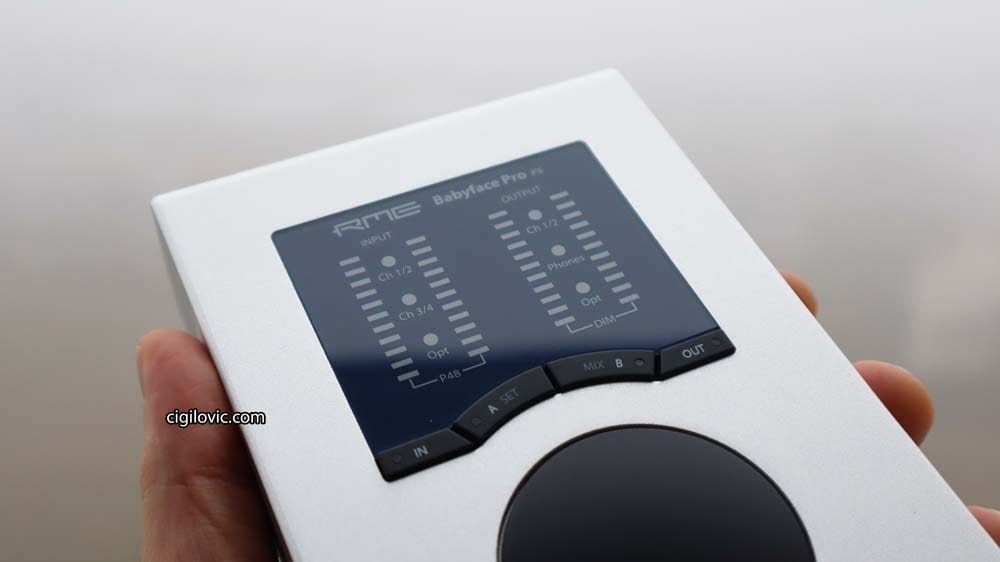
Press IN several times to step through the inputs 1/2, 3/4 and Optical (SPDIF/ADAT). Press SELECT several times to step through left, right or both channels, as indicated by flashing LEDs. Then turn the wheel to change the gain, or press SET to activate phantom power (only in stand-alone mode).
Phantom power is signalled by two orange LEDs at the bottom of meters 1 and 2. OUT gives access to the output volume control. Press OUT several times to step through the outputs 1/2, Phones and Optical (SPDIF/ADAT). Then turn the wheel to change the level.
To change the output balance, press and hold SELECT before turning the wheel. DIM activates Dim for the Main Out as defined in TotalMix FX. The input LED Opt also serves as a synchronisation indicator for the digital input. It stays yellow when the input is selected but has no input signal (No Lock). It flashes green when the signal has been detected but is not fully synchronous (Lock). When in Sync, the colour changes to a constant green. 
The button DIM is also used for Recall, to load a specific listening volume for the Main Out that can be defined in TotalMix FX. Pushing the knob SET for 2 seconds when OUT is selected stores the current setting. If the volume (output level) has been changed, pressing DIM for two seconds will restore the former value.
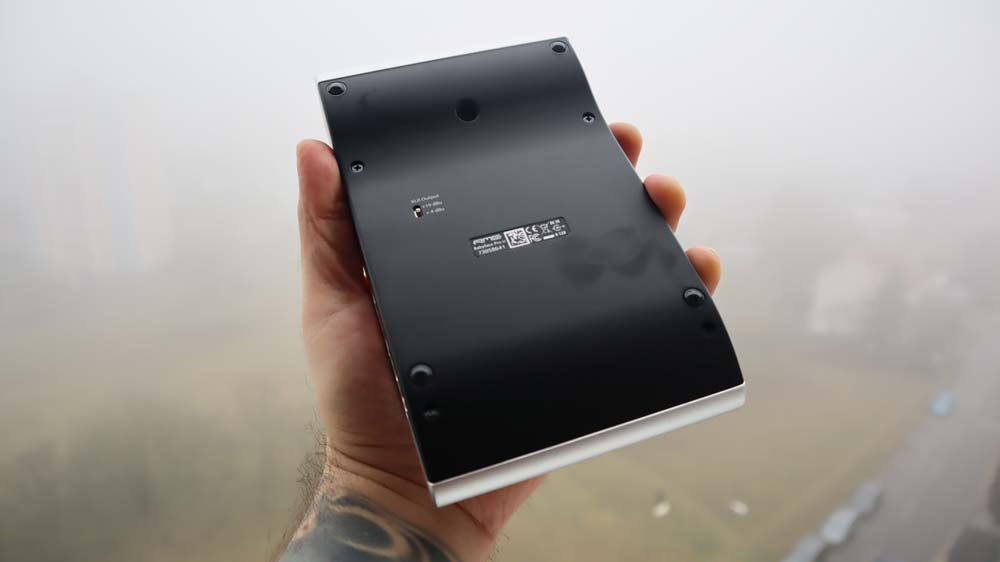
On the underside of the Babyface Pro FS there is a 3/8″ thread for mounting the unit on tripods, as well as a recessed slide switch that sets the maximum XLR output level to +19 dBu (default) or +4 dBu.
+4 dBu is recommended when connecting sensitive amplifiers or active monitors. It helps to reduce noise and to lower the fader in TotalMix FX because the output level is then 15 dB lower.
The right side of the Babyface Pro has two instrument/line inputs, two headphone outputs, and a K-slot for theft protection locks/cables. The analogue inputs 3/4 are high impedance, unbalanced multi-purpose inputs with TS jacks. They include 9 dB fine digital gain control, and a choice of +4 dBu or -10 dBV reference level, controlled from the Tools menu of input channels 3 and 4 in TotalMix FX. The output channels 3/4 feed two Phones outputs via two independent driver circuits, optimised for high (TRS 1/4”, 6.35mm) and low impedance (TRS 1/8”, 3.5mm) headphones. Their unbalanced output signal is – in terms of quality – identical to the ones at the XLR line outputs, but lower in level. 
In case the phones output is to be used as line output, an adapter TRS plug to RCA phono plugs, or TRS plug to two TS plugs is required. More on cable codes and pinouts can be found in chapter 29.2. The back of the unit has the XLR inputs and outputs of channels 1/2 (setting the maximum output level is described on page 7)! The short-circuit-protected, low-impedance XLR line outputs do not operate servo-balanced! When connecting unbalanced equipment, make sure pin 3 of the XLR output is not connected. A ground connection might cause a decreased THD (higher distortion) and increased power consumption! The Babyface Pro has two analogue microphone inputs that can operate as line inputs with levels up to +19 dBu, when set to 0 dB gain and PAD active.
The electronic input stage uses a servo-balanced design which handles unbalanced and balanced signals correctly, automatically adjusting the level reference. When using unbalanced cables with the XLR inputs, pin 3 of the XLR jack should be connected to ground. Otherwise noise may occur, caused by the unconnected negative input of the balanced input. The left side of the Babyface Pro has an optical input and output, a power supply connector, a USB socket and a 6-pin MINI DIN connector for the included MIDI breakout cable.
Optical I/O (TOSLINK): The unit automatically detects SPDIF or ADAT input signals. The optical output can operate as ADAT or SPDIF output, depending on the current setting in the Settings dialogue. USB 2.0: Standard USB socket for connection to the computer. Please make sure the Babyface Pro can have the full voltage/current delivered from the computer by using high-quality USB cables (like the one included), no USB extension cables and no USB hubs.
Only fools keep their cash in a bank account! Let your money work for you with the most trustworthy broker ever!

When connected to USB 3, only the USB 2 protocol will be used. Socket for power connection. Unburdens the computer’s power supply, or ensures a stable power supply, in case it proves to be insufficient when taken from the computer. This socket supports locking-type jacks as found on the optional RME DC power supply. After inserting the connector, carefully turn it by 90° so that it locks.
I was actually partially wrong about not expecting an upgrade. It had been around 4 years since RME Babyface PRO was released, and to be honest, I wasn’t even expecting a completely new design. In my opinion, RME Babyface PRO FS can be considered a step-up model from the original one with the technical improvements, additional features, and improved box content (with the addition of a more modern, USB-C cable added on top of the previous USB 2.0 version).
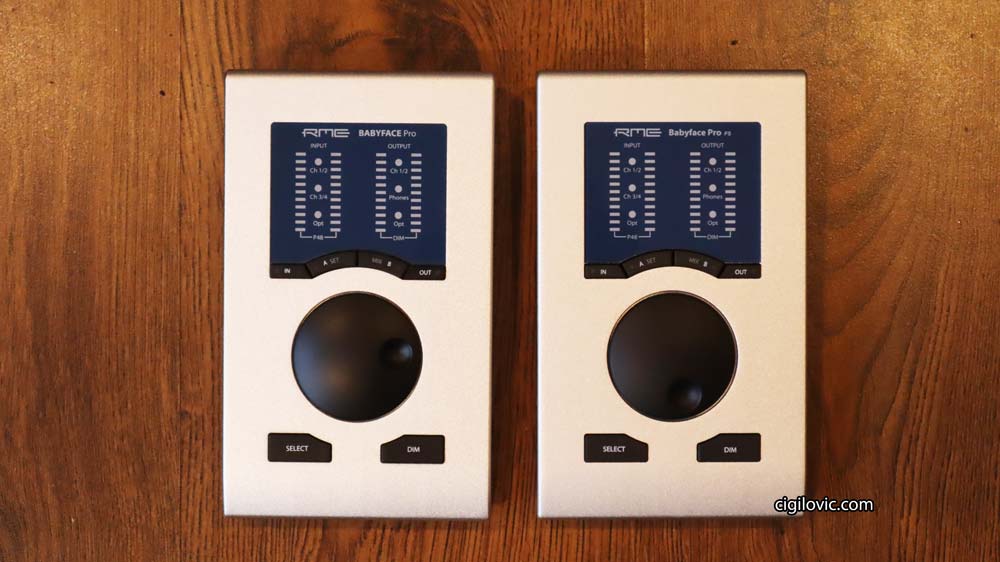
RME Babyface PRO vs Babyface PRO FS
After I have checked out what’s new, I feel like they have fine-tuned an already perfect product to extreme precision! In terms of appearance, it looks identical to the RMA Babyface Pro with an added K-slot for theft protection. Here’s what’s new with RMA Babyface PRO FS.
+19 / +4 dBu switch for reducing the output level. With this switch, SNR (Signal-to-Noise Ratio) has been improved for sensitive reference monitors and helps to keep TotalMix FX faders near zero dBs! A new circuit called Full SteadyClock FS, just like the one in the ADI-2 Pro FS, provides the lowest and highest jitter immunity.
3.5 mm TRS phone output power has been increased from 70 mW to 90 mW, and THD (Total Harmonic Distortion) has been improved by up to 10dB for each phone’s output.
The output impedance of the 3.5mm TRS input has been lowered from 2 Ohms to 0.1 Ohms. SNR (Signal to Noise Ratio) on microphone inputs has been improved from 112.2 dB to 113.7 dB, and on TRS Line inputs has been improved from 114 dB to 116.3 dB (120 dBA), and THD Line inputs have been improved by 8 dB.
On the AD side, 6 samples have less latency thanks to the new ADC (Analogue to Digital Converter): 5 samples on AD and 7 samples on DA, which gives you an average of 6 samples. These improvements have been achieved without adding extra power consumption to the unit! Also, they have added a K-slot for theft protection.
And here’s a great introductory video of RME Babyface PRO FS by Syntax TV
RME Babyface PRO FS – Official Video

While I was researching RME Babyface PRO FS on the RMA’s official website, I noticed that the RME Babyface PRO page has been deactivated and has been classified as a discontinued product. That’s why I really wanted to provide my readers with a quick update, because I believe PRO FS will have replaced the original Babyface PRO very soon. So if you are considering buying the best interface, RME Babyface PRO, you should definitely check it out and go for it! 
This fine-tuned RME Babyface PRO FS will cost you a little bit more than the original; however, as I have always mentioned, it will be the best investment you will ever make for your professional recording needs anytime, anywhere! I basically use my Babyface PRO FS 24/7/365 and have had zero issues! Any material that I make here on my YouTube channel features Babyface PRO FS at all times!
Pricing & Availability
Although I really didn’t need to upgrade my original Babyface PRO, I couldn’t resist and went for it. As almost always, I purchased my Babyface PRO FS from Thomann. Note that when I bought it was around 838EUR, and weirdly it had a 10% discount right after I bought it. Currently, it retails around 749EUR. This is a crazy good deal; don’t miss it!
Check out RME Babyface PRO FS on Thomann here
You may also want to check out used versions, but I must say, just good luck to you! 🙂 It’s very difficult to find RME Babyface PRO FS in used condition. And it’s very easy to guess why, because it just works! 🙂 People buy these extremely well-made audio interfaces which offer crazy long-term stability, and they just plug and play these forever! 🙂
Check out RME Babyface PRO FS on Reverb here
Last but not least, you may want to check out Amazon, as these interfaces are also available in the US as well as other markets via Amazon stores.
Check out RME Babyface PRO FS on Amazon here
I hope this piece of exciting news has been helpful to you! Please consider subscribing to my mailing list to get notified of the freshest content here. Thanks for visiting my blog and supporting me so far! I will hopefully see you in the next review here!