- Very well thought of, simple and lean tube preamp
- Can be used as the core of a direct guitar system
- Sounds and feels great
- Comes with multiple analogue speaker simulations
- A lot better playing feel with IRs and power amp simulations
- Limited usage due to the nature of simplicity
Hello there, and welcome back to yet another guitar preamp review! If you are a regular reader, you are probably aware that I keep testing different tube preamps and sharing my experiences here. As tube guitar preamps are not the most popular guitar gear these days, I’m only able to publish guitar preamp reviews from time to time. Recently, Carl Martin Ampster tube guitar preamp got my attention, and I wanted to give it a chance! I think Ampster is the simplest, leanest and easiest to use one in comparison to what I have tested so far. There’s no channel switching, boost or anything built in this tube preamp in pedal format, and it may be interesting to see what it can achieve.
Table of Contents
So, like I always do, I will do my best to provide as many details as possible about the Carl Martin company and the tube preamp pedal and a brief demo video in this Carl Martin Ampster review, as well as original photos of the product.
TL;DR
Even though tube guitar preamps are long gone in the history of guitar gear, there are still companies out there working hard to give you this option in this digital age!
Carl Martin Ampster aims to give players the bare-bones, plain, simple and lean tube guitar preamp in the most compact form.
Ampster features a set of amp-like controls and comes with a pair of analogue guitar speaker simulation. Ampster can be used for direct recording sessions or replacing your amp entirely by directly connecting it to a PA system, reference monitors or any powered speakers.
Carl Martin Ampster is a joy to play through, especially with cleanish, slightly overdriven sounds. However, don’t expect to get millions of different sounds and different gain structures out of this unit. It’s just made to be a compact solution for guitar players with an already functioning guitar rig. The amount of overdrive, crunch and distortion is fairly low and basic in quality.
Although I strongly believe and have experienced how good a tube guitar preamp with impulse responses and power amp simulations, I find Ampster pretty limiting and can’t fully support company’s claims that suggest it could replace a core component (amp, preamp or entire rig…etc) in your rig.
If you want a simple, pure tube preamp and can be happy with those limited sounds, Ampster may be your ideal DI solution. However, if you are after a lot of gain structures which you can combine with your pedals at your arsenal, it may not be the right solution.
cigilovic.com can’t suggest Carl Martin Ampster to anyone who is seeking a tube guitar preamp to replace their amps and rigs. It’s just a basic tube DI with some cool features and can only satisfy certain guitar players who can be just happy with simple, clean tube DI sounds.
I would personally go for more advanced tube guitar preamps and try to combine these with IR loader and power amp simulations to achieve usable tones.
Let’s start with a quick introduction to this legendary brand, Carl Martin, for those who have never heard of it!
About Carl Martin
East Sound Research was founded in 1990 by sound innovator and technology enthusiast Søren Jongberg, who became widely respected among musicians worldwide as the creative force behind the legendary Carl Martin product line. The company began as a PA rental business, but Søren’s passion for electronics and sound quickly expanded its focus. By 1993, East Sound Research introduced its first effects pedal, the Hot Drive’n Boost, marking the beginning of what would become an iconic range. Over the years, the Carl Martin brand has grown to include nearly 50 pedals, along with a selection of handcrafted, point-to-point tube amplifiers and cabinets.
Please consider supporting this blog by buying your gear from Thomann using my links at no extra cost to you, many thanks!

In 2023, the music world lost Søren far too soon. He left behind a company admired for its innovation and trusted by countless musicians, both household names and passionate players around the globe. Søren’s long-standing partnership with DanGuitar.dk, based just a short distance from East Sound Research in Grenaa, Denmark, paved the way for the next chapter. In 2024, ownership of Carl Martin was entrusted to Thomas Svenstrup, founder of DanGuitar.dk.

Today, Thomas and his team, joined by several of the original Carl Martin technicians who worked closely with Søren for decades, carry forward the brand’s legacy. Their mission is not only to preserve the spirit and craftsmanship of Carl Martin but also to push the boundaries with innovations for the future. Here’s a brief product line of the Carl Martin company in chronological order.
1993 – Hot Drive’n Boost (first Carl Martin pedal)
1994 – Compressor/Limiter
Early 2000s – Delayla XL, PlexiTone
Mid-2000s – Vintage Series: Crush Zone, Surf Trem, Red Repeat
2008 – Vintage DC Drive, Vintage Flanger, Rock Bug
2012 – AC-Tone, Bass Drive, TOD, updated PlexiTone
2016 – Red Repeat 2016 Edition (with Tap Tempo & modulation)
2017–2018 – Compact lineup: DC Drive V2, Atlantic Chorus, Axis Flanger, Purple Moon, Panama, TOD Turbo
2020 – PlexiRanger: a versatile Plexi overdrive + dual boost with stackable sections
2022 – Honey Comp: next-gen parallel compressor with dry blend, internal ±12V headroom, compact footprint
Present – Signature and pro-grade models like Andy Timmons Compressor/Limiter, Ampster, Acoustic GiG, and utility tools including Octa-Switch, Pro Power v2, and DC Factory.
Carl Martin Ampster
The days of giant amp stacks are long gone; today’s guitarists want compact gear that still delivers big tone. That’s exactly where the Carl Martin Ampster comes in. This tube-driven, fully analogue amp and speaker simulator is designed to fit right on your pedalboard. Ampster can be used to complement your existing amp or even replace it entirely. With classic amp-style controls and options for both 2×12 open-back and 4×12 closed-back cab simulations, the Ampster delivers the same natural feel and response you’d expect from a real amp, without the heavy lifting. 

You can plug the Ampster straight into a mixing console, recording setup, or your favourite amp, and enjoy warm cleans, rich drive, and an organic response that reacts to your playing. The Ampster is all about real amp tone, simplified for the modern guitarist. Although it’s marketed as an Amp/Speaker Sim DI, it’s actually a tube preamp with analogue speaker simulation built into it. It’s not going to power a speaker. The Ampster is housed in a solid metal box with the standard EQ (Bass, Middle, Treble), pre and post volume/gain controls (Master & Gain), plus a Presence Control. 
There is a Mute Switch and a Cabinet Switch with an LED Indicator light.
Red for a 2×12 Open Backed Cab
Green for a 4×12 Closed Back Cab
On the I/O section, there’s a Ground Lift and a Voicing Switch that allows the user to adjust the low-end response. There’s also an Input, Balanced DI output, a Send & Return jacks, a Link (which is the output to an amp) and a Remote Input (Cab Sim) to use with digital or analogue effect controllers. Lastly, there’s the Power In socket for powering up the unit with the included power supply.

Before we dive into the Ampster sound demo and the detailed review of the pedal, let’s first have a quick look at the tech specs table.
Tech Specs
| Carl Martin Ampster | Tech Specs |
|---|---|
| Input | 1M Ohm |
| Output 1/4" Unbalanced | 1 K Ohm |
| Output DI Balanced | 600 Ohm |
| S/N Ratio | 56dB |
| Send Impedance Loop | 1 K Ohm |
| Return Impedance | 100 K Ohm |
| Dimensions | 145 (W) x 120 (D) x 70 (H)mm 5,7” (W) x 4,7” (D) x 2,75” (H) |
| Weight | 0,80kg / 1,76lbs |
| Power Supply | 9V DC 1A (*Included, but may vary based on purchase location) |
| Made in | China |
As you can see, it’s a very lean, simple and basic tube preamp pedal.
Sound Demo (no talking)
Just before the review section, I’d like to share the sound demo video that I prepared for you!
In this video, I used my Ibanez AR300 guitar, Carl Martin Ampster preamp, Two Notes Opus, Carl Martin HoneyComp compressor, Carl Martin PlexiRanger, Dunlop MC-404 CAE Wah, and Maxon ST9Pro+ as a boost pedal powered by Cioks DC7. This signal chain is directly recorded into Reaper via the RME Babyface PRO FS interface and monitored via Genelec 8020 DPM monitors. The only effect is the Wave Alchemy Magic7 reverb, which is a freeware one (definitely check this out!). 
I tried to show you the difference between the two analogue cab sims built in. I also wanted to demonstrate how much of a difference you could get with IRs (impulse responses) by engaging the Two Notes Opus. You will hear all these flavours in the video and see Ampster react to different overdrive pedals as well. Hope you like it!

Review
Carl Martin Ampster comes in a very well-designed, sturdy pack as shown below. Although it’s a Danish brand, AFAIK, all the Carl Martin product line is made in China these days.

Here’s a shot from the unboxing of Ampster. As you can see, they didn’t hesitate to invest in good packaging. The unit itself is well-protected and held between the hard foam on both sides.

On top of that, the power supply comes in a separate box as seen above, and it’s also well protected with the same hard form around. Here, I’d also like to share the barcode and the serial number of the unit, which can be found on the box. I do this for future reference, as some people online may be searching for this information.

Ampster comes wrapped in nylon packaging. I did a quick inspection and found the cosmetics pretty much top-notch. Well done, Carl Martin!

As mentioned, the included power supply comes in a separate box, well-protected by the hard foam, and it’s separated from the unit. I think Carl Martin did a great job with the decision to invest a little bit in the packaging.

The included power supply, as shown in the tech specs chart, is a 9V DC adapter. But it’s not a standard 9V DC power supply! The required current value is 1A or 1000mA. I was thinking about powering this up with a Cioks DC7 power supply, but I realised that no output could supply 1A. The maximum current Cioks DC7 can feed is 660mA.

I didn’t want to take the risk, so I just used the provided power supply during my tests. Also, I’d like to point out a couple of user reviews across different websites. As I mentioned in the tech specs chart, the included power supply may vary, meaning that you may not find a power supply included based on the region.

In some countries, such as the UK, users would complain that there was no power supply included. This may be due to the never-ending restrictions on the import regulations.
Only fools keep their cash in a bank account! Let your money work for you with the most trustworthy broker ever!

Sometimes, specific customs for each country may make things difficult for the importer and consider these accessories very differently from how they are actually categorised and come up with additional charges. So, I recommend you check with your supplier before you purchase. But for Thomann orders within the EU, there’s no issue reported. Also, if you have a power supply that can feed 1A current, you are good to go! 🙂

Lastly, we have the warranty card as shown below. It’s not a product-specific warranty card, but just mentioning that you are the proud owner of a Carl Martin product.

As mentioned, Carl Martin Ampster is one of the leanest, simplest and easiest to use tube guitar preamps on the market. There’s no channel switching, no tone alterations, or gain staging built in on the device.

You have only a pair of footswitches on the unit. The first one is for choosing the built-in analogue cabinet simulation, and the second one is for muting the unit. The controls on Ampster are just like what you would find on a standard amp. You have your basic EQ, as well as Master and Gain knobs. They also didn’t hesitate to install that metal bar above the knobs to prevent damage. This also doubles as a handle! 🙂

One thing about the knobs: The knobs on what I received did not have the same smoothness. Some of them were pretty stiff while the others were a lot looser or smoother. Apart from that, the overall build quality is awesome! The bottom chassis came as shown below. There was already a surface-wide foam pad, which makes the unit extremely stable on your pedalboard. As you can see, they even carved out the corners where the screws are located. Really nice detail!

I think the most complex-looking part of Ampster is the I/O section. Let’s go through these together. You have your standard input, and right next to it, you have the “Link” output. According to the manual, Link is just a parallel signal coming out of your guitar that you can send directly to another amp. I think this is very smart, as you may want to use Ampster for a smaller monitor on stage and still want to feed your direct guitar signal to another amp or a rig. On top of these, you have your standard Ground Lift that is linked to the DI out. I did a quick test to see if it changed anything in my environment, but saw no difference. Ampster does not introduce any unexpected noise in my experience.

Next, we have the Balanced DI output. This output can send Ampster’s signal with the built-in speaker simulation to a PA system, monitor or your DAW of choice for direct recording and monitoring purposes. We also have a pair of FX Loop jacks labelled as Send and Return. Although it’s clearly labelled on the unit, the official manual states that there’s an Insert. It obviously points out the FX Loop, but it looks like it’s not clear at first glance. This FX Loop is a series one, and the FX Return jack contains a normal switch that interrupts the signal whenever a plug is inserted into it and automatically bypasses the FX LOOP when the plug is removed.
Because of this, the FX SEND jack may be used as another pre-EQ, pre-MASTER volume Output. In the demo video, I recorded both Balanced DI Out as well as the Send to capture an analogue cabinet simulation, as well as the signal without the simulation. That way, I was able to add Two Notes Opus‘s IRs and show you how it sounds with IR vs Built-In cabinet simulations. There’s also the Voicing switch, which alters the low-end response of Ampster. I did not demonstrate this, as it is a subtle effect concerning the low end. It’s not like an extreme boost or voicing. But slightly lowering the overall low-end response of Ampster. As far as I remember, I only used it in the middle position.
Lastly, we have the Remote jack, which you can use for switching between the different analogue cabinet simulations built into the Ampster. You may ask why we have the option, while we already have a footswitch for this? It’s mainly there because some players rely on a complex switching system to which all the pedals and devices are connected. So, you can control the entire rig as well as even the cabinet simulation on Ampster remotely, thus it’s called Remote! 🙂
Verdict
The reason I got myself a Carl Martin Ampster was just curiosity and not a need at all. If you are a regular reader, you are already aware that I love tube guitar preamps and buy & sell them to experiment with these options. What I am trying to achieve is earning that heavily concentrated gear experience without relying on someone else’s opinions. What I have found out so far is that the highest amount of pleasure I have playing guitar through is a simple tube amp with reactive loads and IRs (not to mention my pedalboard that contains various overdrive, distortion and effects). I cannot have a guitar speaker cabinet in my tiny living room; it’s impossible to play at all! For that reason, I have always experimented with direct recording systems through which I can monitor my guitar just like in a studio situation.
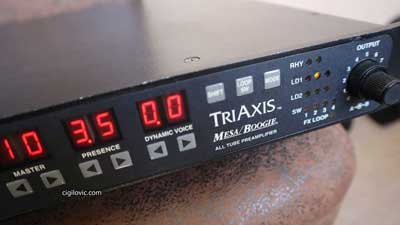
So far, tube amps, reactive loads with IRs and a couple of overdrive/distortion pedals yield the best results for my taste! But what about the tube guitar preamps replacing the tube amps? I would say the guitar preamps such as ENGL E570, Mesa Boogie TriAxis, Mesa Boogie Rectifier preamp and my recent purchase, Brunetti Mille CR preamp (review coming!) yield excellent results. Very close to tube amps with reactive loads. However, I believe they are not the same. They still lack some character, openness, fullness and harmonic content in the mentioned rigs.
Still, these preamps feature a lot of tonal options and gain stages that will help you achieve a certain amount of gain texture without any external support such as overdrives, distortions or boosts. By testing the Ampster, I wanted to understand if a simpler, leaner, bare bones style tube preamp could ever bring the same playing joy. My answer to this is unfortunately negative! I don’t think it sounds and feels like the preamps I have tested so far. For cleaner or slightly overdriven tube clean sounds, Ampster can be the core gear that you can utilise and build your rig around. However, when combined with overdrives and distortion pedals, it’s still lacking the fullness and body as well as the responsiveness of proper tube preamps. 
For those reasons, I’m not able to praise the Ampster a lot and blindly recommend it to anyone who is seeking a simple tube guitar preamp. Wish they made it a little bulkier and added some gain stages for better handling of external ODs and distortions. I must confess that I enjoyed every moment while playing the Ampster without any distortion pedals. The semi-clean tones are pretty joyful to play simple stuff. But adding drive pedals did not help much at all. If I had the Ampster 15 years ago, I would probably praise it all day long. But to me, it sounds outdated in the current market.
As you may know, there’s no exact alternative to Carl Martin Ampster, so I think the company did a great move to fill that space in the DI category. Maybe, they will come up with a different version, utilising built-in IRs and additional gain stages and tone-altering options one day!
Pricing & Availability
Luckily, the Ampster is still actively manufactured and can be purchased from any official dealer of Carl Martin across the globe. I got mine from Thomann, as always, and I believe no one can beat Thomann when it comes to the most competitive prices for any given item. So, I suggest you do the same if you are considering one!
Check out Carl Martin Ampster on Thomann here
If you are influenced by my slightly negative review here, you may also consider checking out Reverb for used Ampsters. There are not many, but sometimes you can grab one for a really good used price!
Check out my Carl Martin Ampster on Reverb here
Thanks for visiting my blog and supporting me so far! I will hopefully see you in the next review here!