Excellent RG model that features a humbucker and a single sized humbucker
Very unique pickup combination
One of the easiest to play guitars
Almost Impeccable craftsmanship
Cons
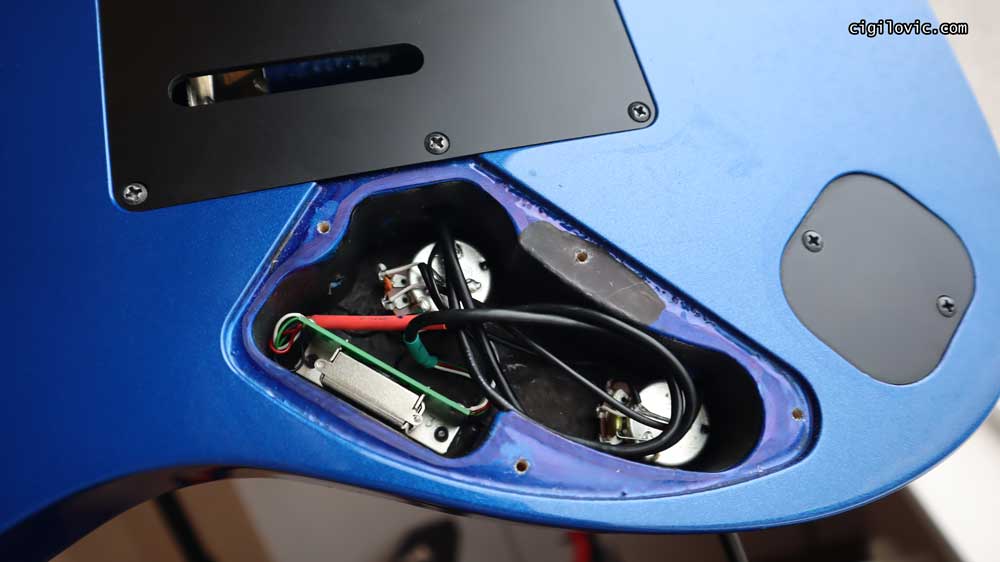
The one I got had some damp paint in the tremolo and electronics cavities
Wish it had come with with a gigbag
Where to buy
Hello there, and welcome back to another cool guitar review article for you! This time, we will be looking at one of the most legendary guitar designs ever, the Ibanez RG565! In this article, I will provide a brief history of the Ibanez RG guitars, as well as a demo video of my RG565 in Laser Blue.
Table of Contents
About Ibanez
As many of you know, Ibanez is a legendary Japanese manufacturer of musical instruments, primarily guitars and basses, as well as amplifiers and other accessories. Unlike many of us are aware, Ibanez has a long history in making musical instruments and is possibly a way longer-established company than many of us think. Ibanez‘s history can be easily traced back to 1908, when Hoshino Gakki, a Japanese musical instrument company, was founded. In their early days, they imported only Spanish guitars. But also had a long-term ambition in the guitar business. The Ibanez brand name was actually derived from the name of the actual Spanish luthier, Salvador Ibanez, who was building guitars for the company. The company first used the Ibanez Salvador name and later just branded itself under the Ibanez brand to honour the Spanish luthier.
As Ibanez was getting a lot of attention for their extremely valuable guitars (lawsuit era), Gibson brought suit against Ibanez due to their clone guitars. Hoshino Gakki did not really want to fight against it, as the company could be in the same situation, not just with Gibson but also with other guitar manufacturers. This era was the triggering moment for Ibanez to take a look at the company’s long-term ambition in the guitar business.
Ibanez logo
Through the 70s, Ibanez worked with various artists who featured Ibanez’s original designs, such as Paul Stanley, Steve Miller, George Benson and Bob Weir. However, moving forward with the 80s shredders era, they still had issues with their brand identity. Actually, what Ibanez wanted was someone like Eddie Van Halen and what he did for the Kramer brand. Ibanez had already worked with legendary guitar players such as Lee Ritenour, Joe Pass, Steve Lukather and Alan Holdsworth, but the company was missing a rockstar image that could boost the brand’s identity. After having long discussions and meetings, they decided to go to Steve Vai! Vai was already getting a lot of attention when he joined Frank Zappa at the age of 20 years old. Later, he replaced Yngwie Malmsteen in Alcatrazz and also released his debut album. Around 1985, he joined David Lee Roth’s band, taking giant steps into the rock music scene.
Up to 60% discounts on selected items, don't miss this.
Vai was already cooperating with other guitar brands such as Kramer and Yamaha, but his customisation needs were usually neglected, and he ended up with pretty much the same standard models that these companies manufactured with some tweaks for him. Ibanez eventually managed to contact Steve Vai and got his attention and their cooperation, which changed the guitar designs profoundly. Legendary luthier, Mace Bailey at Ibanez, made prototypes for Steve Vai based on his input and came up with the JEM design, which would later give birth to the legendary RG series. This collaboration made Ibanez so successful and gained huge respect and following in the guitar community in the 80s until this day. Although the RG model was considered the edgy, modern and unusual guitar design back in the day, it’s accepted as a classic electric guitar design that has its own place next to Strats and Les Pauls. Today, Ibanez is still manufacturing dozens of models along with their classic line and is one of the most respected guitar brands ever known to us.
Update: Unfortunately, this guitar was discontinued right after I published this article and demo videos for you! But you can still find them online, especially on Reverb.com, both used or brand new. If you are interested in this model, I suggest you hurry up as most of the owners do not seem to be selling these soon!
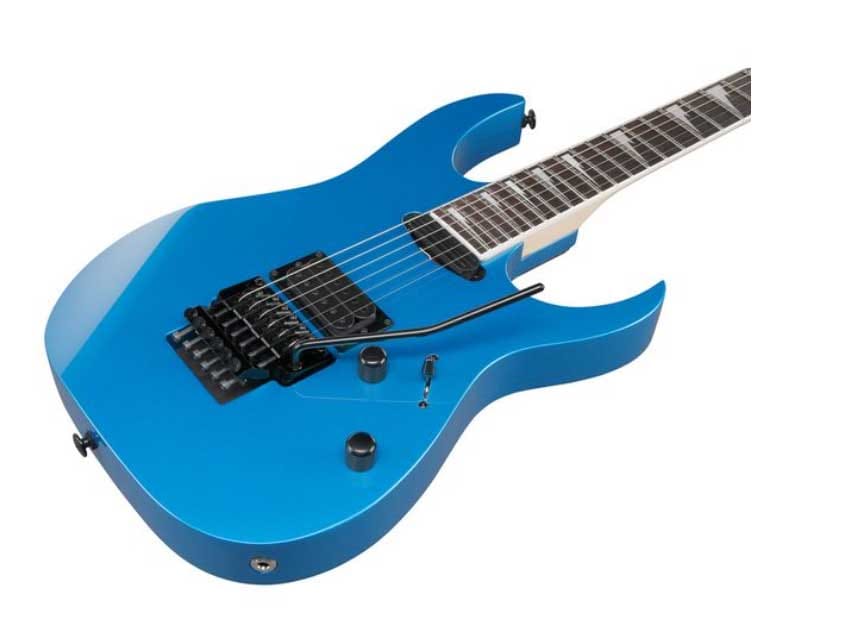
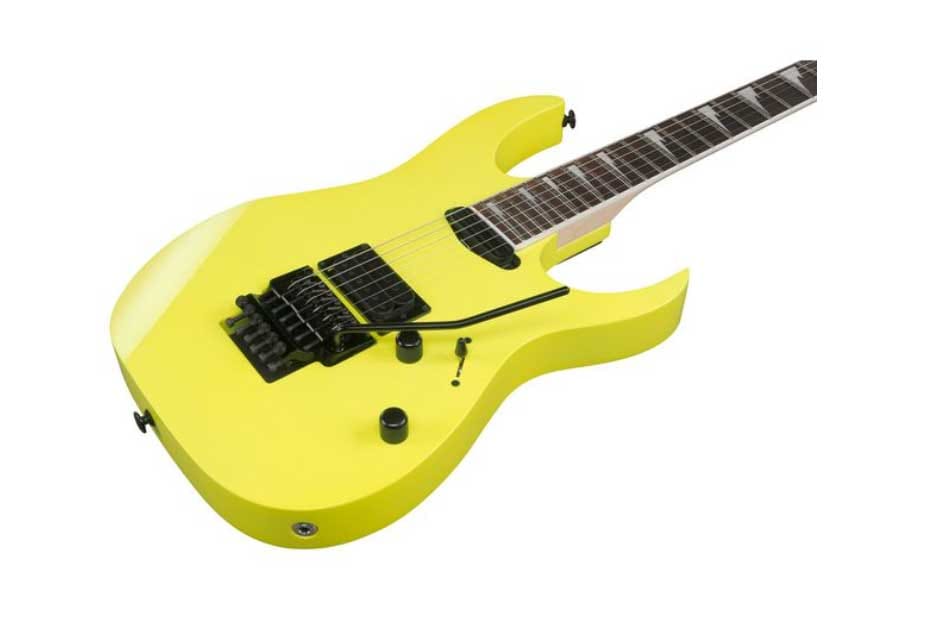
However, Ibanez has come up with the new iterations of RG565! This time with rosewood fingerboard and shark tooth inlays! You can already purchase/pre-order from Thomann here!
Ibanez RG565 – Electric Blue w/ rosewood fingerboardIbanez RG565 – Desert Sun Yellow w/ rosewood fingerboard
Interestingly, this was true for Ibanez until a much more recent era. Around the mid-60s, the Fujigen factory manufacturing guitars for Ibanez had grown rapidly; in 1965, the company built a new factory in Matsumoto. During the ’60s, it was one of the first guitar and musical instrument companies to make a significant impact in the USA and Europe with its clone guitars (this is called the lawsuit era). They eventually created guitar designs that are considered classics today.
Short History of Ibanez RG Guitars
As Gibson brought suit against Ibanez due to their clone guitars, Hoshino Gakki did not really want to fight against it, as the company could be in the same situation, not just with Gibson but also with other guitar manufacturers. This era was the triggering moment for Ibanez to take a look at the company’s long-term ambition in the guitar business. Through the 70s, Ibanez worked with various artists who featured Ibanez’s original designs, such as Paul Stanley, Steve Miller, George Benson and Bob Weir. However, moving forward with the 80s shredders era, they still had issues with their brand identity. What Ibanez wanted was someone like Eddie Van Halen, and what he did for the Kramer brand.
Ibanez had already worked with legendary guitar players such as Lee Ritenour, Joe Pass, Steve Lukather and Alan Holdsworth, but the company was missing a rockstar image that could boost the brand’s identity. After having long discussions and meetings, they decided to go to Steve Vai! Vai was already getting a lot of attention when he joined Frank Zappa at the age of 20 years old. Later, he replaced Yngwie Malmsteen in Alcatrazz and also released his debut album. Around 1985, he joined David Lee Roth’s band, taking giant steps into the rock music scene. Vai was already cooperating with other guitar brands such as Kramer and Yamaha, but his customisation needs were usually neglected, and he ended up with pretty much the same standard models that these companies manufactured with some tweaks for him.
Buy, sell, play with Reverb.com — The best used gear marketplaces.
Ibanez eventually managed to contact Steve Vai and got his attention and their cooperation, which changed the guitar designs profoundly just started! Legendary luthier, Mace Bailey at Ibanez, made prototypes for Steve Vai based on his input and came up with the JEM design, which would later give birth to the legendary RG series. When JEM design was first introduced to the masses at the NAMM show, it completely blew away the audience and got praised as the ultimate alternative guitar design to actually buying a custom-made guitar. Due to excellent sales figures, Ibanez also came up with RG550, a JEM design but without the edgy aesthetics of the original Vai design.
Since then, RG design guitars have been released with additional variations throughout the years. As you can understand, one can easily trace RG’s roots back to these modern and edgy guitar designs that rocked the world. As a matter of fact, the Ibanez RG series is now considered one of the most distinct and unique guitar designs of all time and is praised as a classic series. Just like your Stratocasters, Les Pauls or Teles.
A Short History: Ibanez JEM & RG by 5 Watt World
If you want to know more about all these cool details and the history of Ibanez RG guitars, I definitely suggest you check out the “A Short History: Ibanez JEM & RG” video by 5 Watt World. There are so many cool things you can learn from this channel!
Ibanez RG565
As I mentioned in the history section, Ibanez RG models have been around for quite some time with many variations. Even though the RG series is considered a classic model in the guitar world, it has also been modernised further with more progressive features that help adapt the design to modern guitarists. Fortunately, Ibanez releases their legendary RG models from time to time! I believe they decided to reissue the original RG series back in 2018 under the Genesis Collection.
Ibanez RG565 Laser Blue, Genesis Collection
The Ibanez RG series guitar is one of the earliest high-end instruments I used to look up to when I was really young. Unfortunately, I was never able to buy one. But now, while almost approaching my 40s, I’m able to collect and hold more guitars in my collection! From the very first moment I noticed this release, I wanted to get one for myself, and I finally received my order from Thomann! Since then, I spent my savings on different guitars and pieces of equipment; however, I finally got ready for it and went for it. I initially was about to go for RG565, but I had to postpone my decision for a long time. After having noticed that Thomann was listing RG550 for a very competitive price tag, I went for an RG565 Purple Neon.
Around the same time, I noticed that Ibanez was also going to release RG565 in Laser Blue colour, and I immediately wanted to own one as well! 🙂 After having ordered one, I regretted my buying decision as I was spending all my money on almost two identical guitars. But I wanted to keep them anyway. However, after having spent some time with both guitars, I realised that the RG550 had some sharp fret ends, and I did not want to accept this issue on such a brand-new instrument that is made in Japan. So I returned it!
As you can see from the tech specs, the Ibanez RG565 is a true reproduction of the original RG series that was released in the late 80s. It features one of the most distinct guitar body designs, the Ibanez RG! The one I got weighs 3.4kg, and it’s just the right feeling on your lap or your shoulders.
Headstock
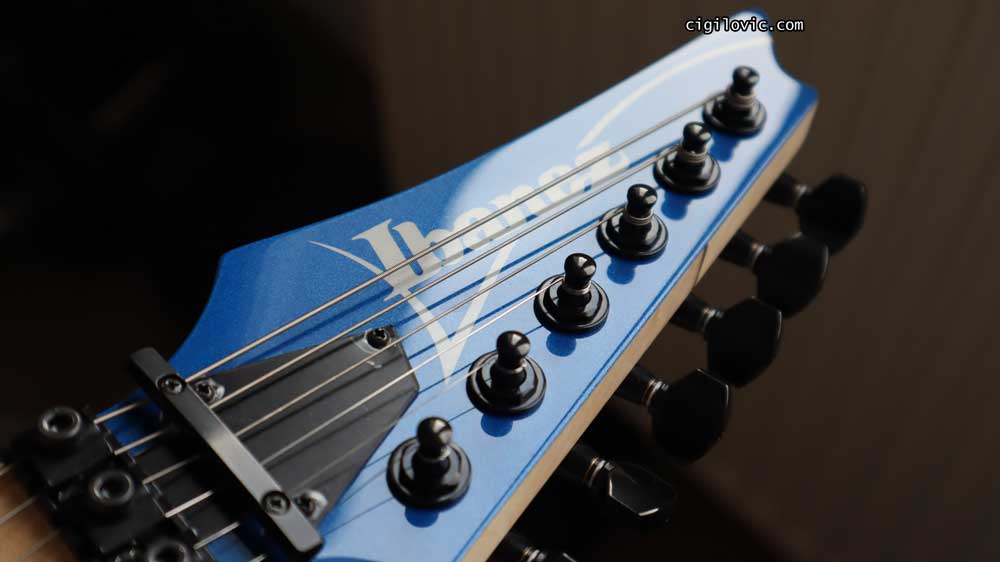
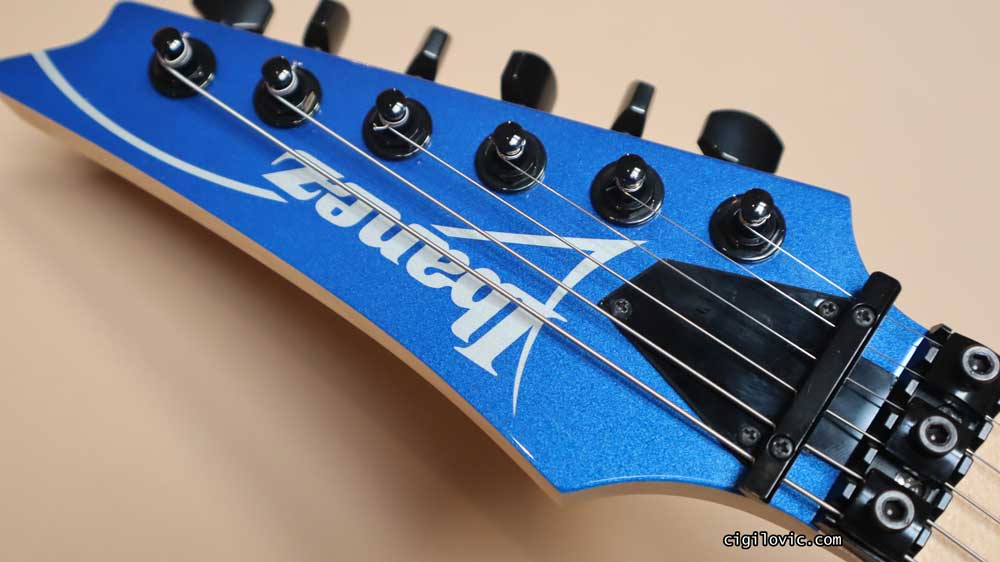
RG565 features a reverse headstock with matching colour. It’s probably one of the earliest headstocks I ever saw while I was growing up. My guitar teacher was a big RG fan, and this headstock was always so appealing to me. I think I was relating this to a certain kind of guitar-heavy music genres! 🙂
Headstock main
Tuners
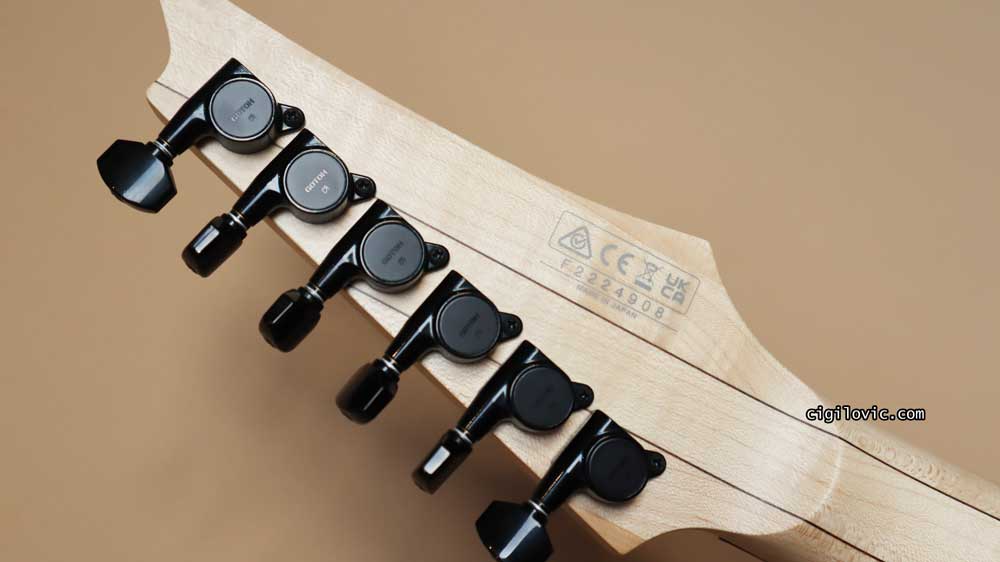
As with all Genesis series guitars, these come with standard Gotoh tuners. These tuners just work! Although you may not need to have the best or the most accurate tuners, as the strings are locked anyway, just know these tuners are top-quality, Japanese-made ones!
Headstock, back Gotoh tuners
Locking Nut
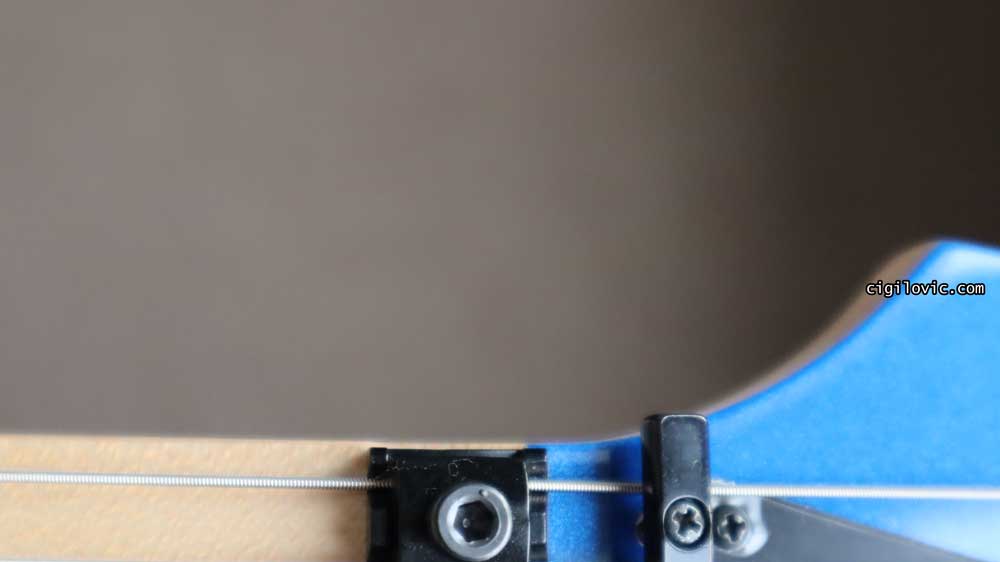
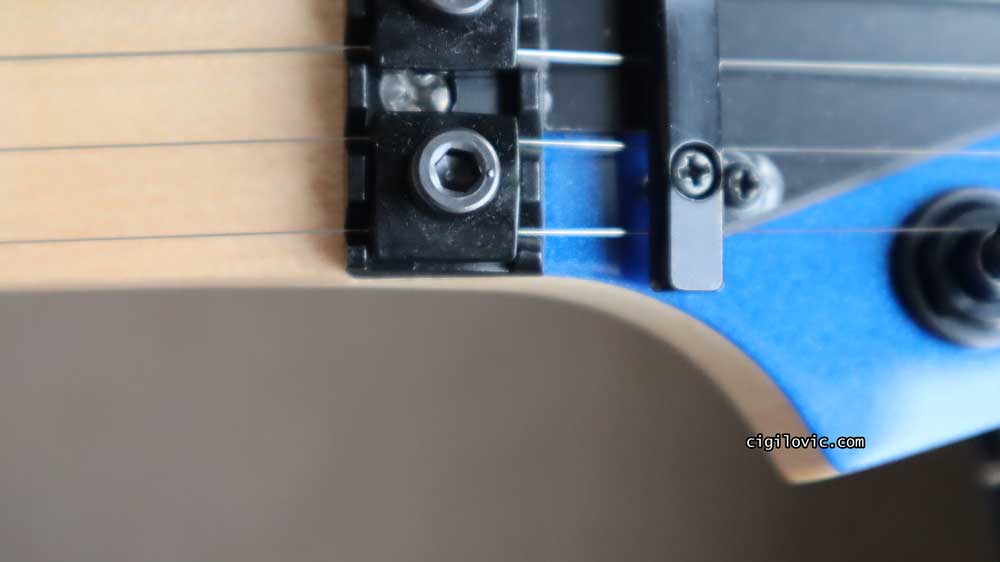
This guitar features an Ibanez Edge, FR-style bridge, and naturally comes with a locking nut. Although I go into details in my comparison article for RG565 and RG550, the locking nut on my RG565 is not aligned with the neck. But this doesn’t create any issues. As I used to work as a guitar tester, I have developed this occupational disease to detect all these details :). As you can see, the top part of the neck is visible in the photo below.
Misaligned locking nut, top
On the bottom part, no such misalignment occurs.
Misaligned locking nut, bottom
Super Wizard Neck
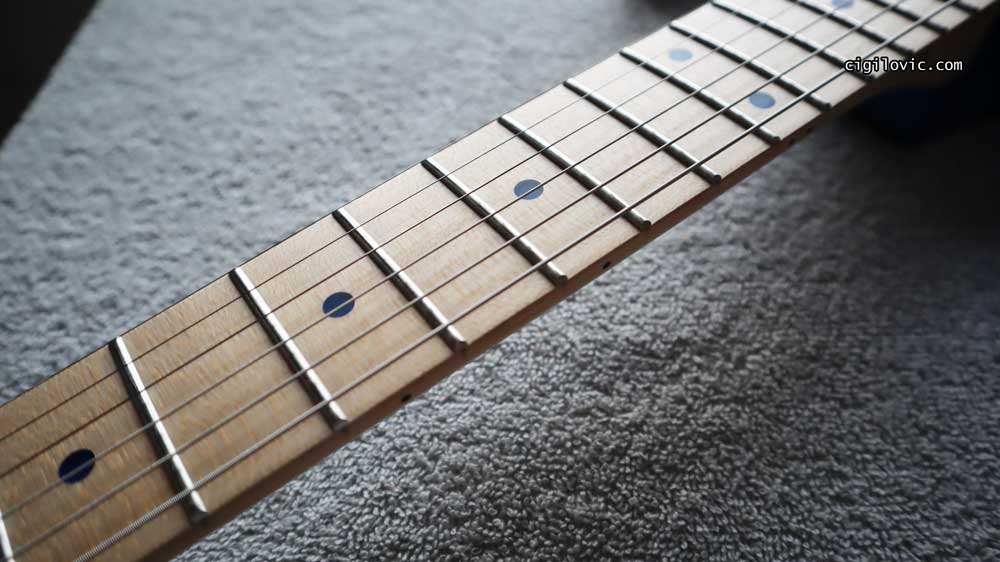
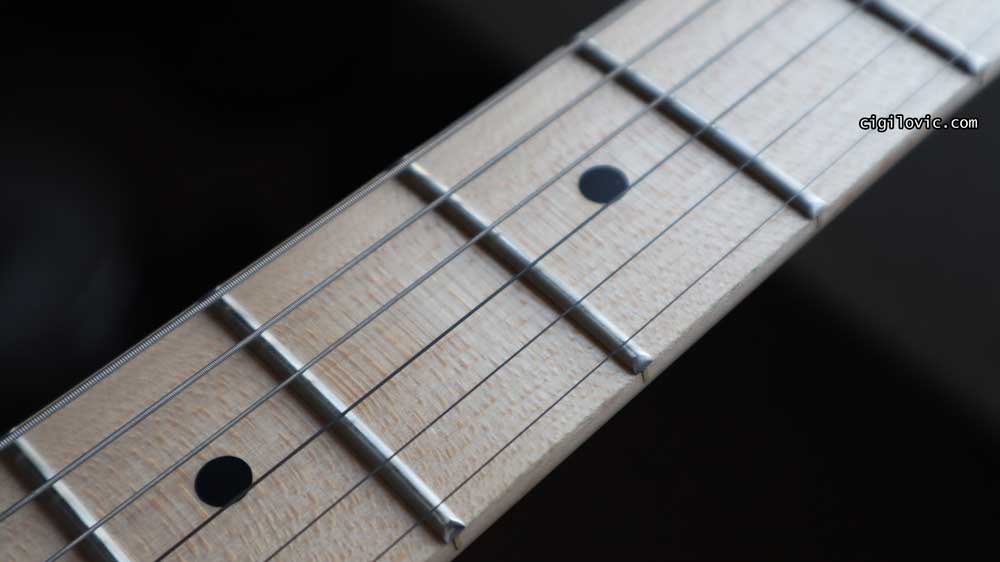
The neck is Ibanez’s Super Wizard neck, which is extremely comfortable and built for shredding. As you can imagine, back in the 80s, shred guitar was a thing, and the Ibanez RG565 was made to handle any shredder’s needs. This Super Wizard neck consists of 5 pieces of maple/walnut to provide better stability. You also have high-quality, made-in-Japan Gotoh tuners and jumbo frets with a supposedly unique feature, Ibanez Prestige fret edge treatment. The reason I say supposedly is that I also purchased the Ibanez RG550 Purple Neon, and I think the fret edge treatment is not the same for these almost identical guitars coming from the same Genesis Collection. I can feel the sharp edges a bit more on my RG550 than on the RG565.
Fretboard, close up
While RG565, coming from the same collection, has a flawless fret job, RG550 has some fret sprouts. This is actually at a very minimal phase, but it’s still concerning, as you would not expect this on a Japanese-made Ibanez. Having had the chance to compare two RG models with an almost identical core feature set was pretty eye-opening for me. As I mentioned, both guitars feature the Prestige fret treatment, but at the end of the day, the RG550 showed some signs of fret sprouts while both were brand-new guitars from possibly the same batch!
Prestige fret treatment
Looking for the best hosting services for your website? Check out NameHero which also powers this website!
Pickups
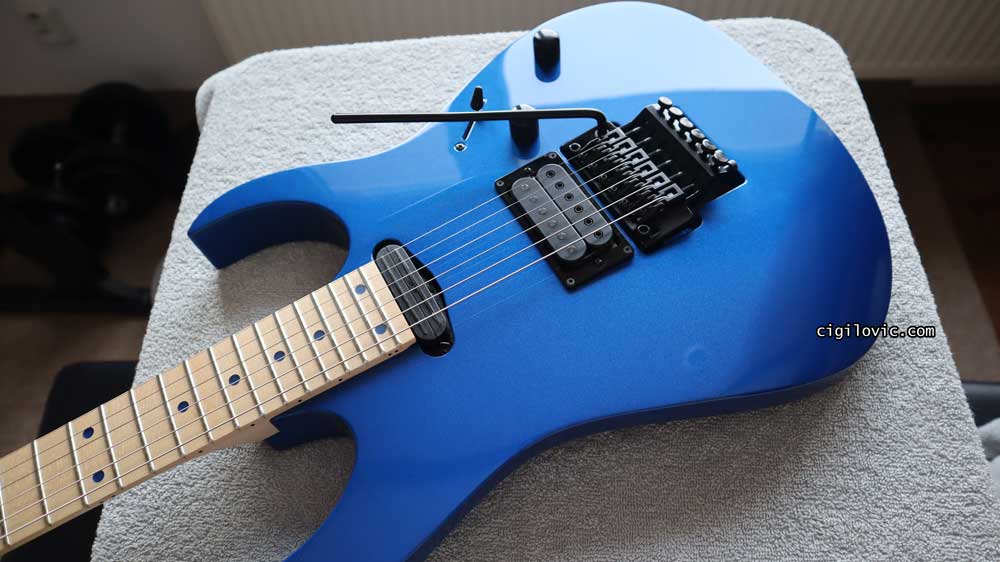
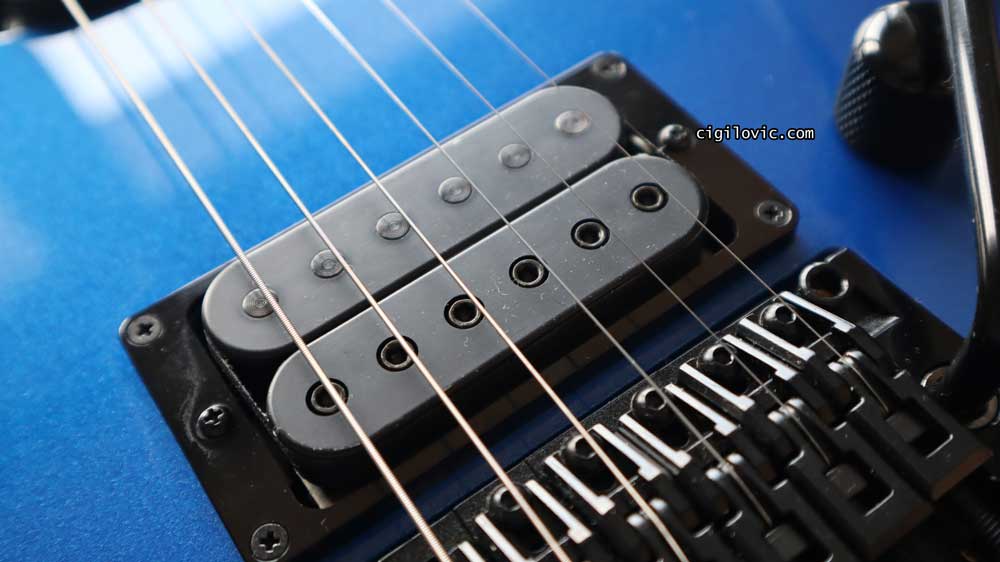
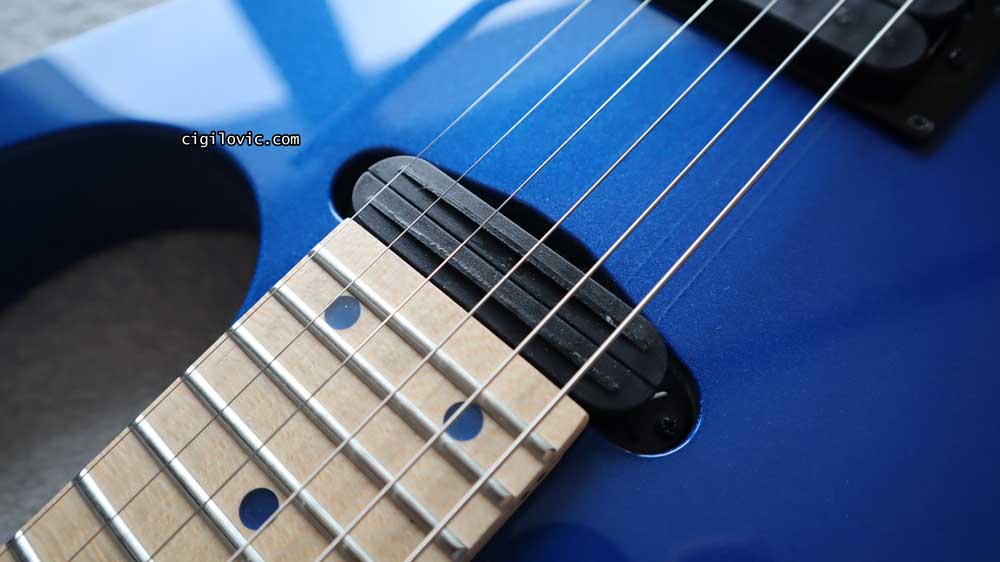
RG565 features a unique H/S pickup configuration with a classic 5-way switch. Unlike RG550, which has an H/S/H pickup configuration, RG565 sounds way more unique thanks to the single-sized humbucker in the neck position. Pickups are classic Ibanez V8 (Passive/Alnico) on the bridge and Infinity R (Humbucker Passive/Ceramic) on the neck.
V8 pickup
As I decided to upgrade the pickups, I measured them and also prepared a demo video for both the V8 and Infinity RD pickups. Ibanez V8 on the bridge position is 16.9K, and the Infinity RD on the neck is 5.4K. Just for the record, the 2nd position is 2.07K, the 3rd position is 4.16K, and the 4th position is 1.37K. I will be publishing separate articles for these pickups and how this pickup upgrade went in terms of sound, feel and compatibility with the instrument soon. So stay tuned!
Balance-wise, the H/S/H option may be better, but I must say I’m really impressed by these unique voices on my RG565. However, in some positions, such as 2nd and 4th, you may notice a significant volume drop due to the nature of this single-sized humbucker.
Update: I had decided to experiment with a different set of pickups on my RG565 as it’s been one of my favourite instruments recently. I went for a classic Seymour Duncan Parallel Axis and Hot Rails combination. You can check out my demo video below, and also check out my Seymour Duncan Parallel Axis review.
Seymour Duncan Parallel Axis and Hot Rails
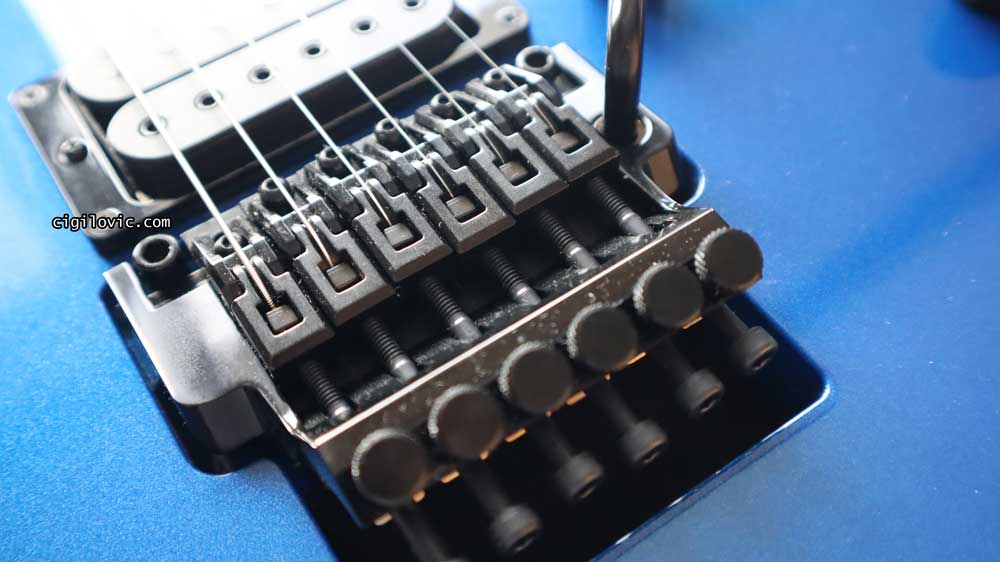
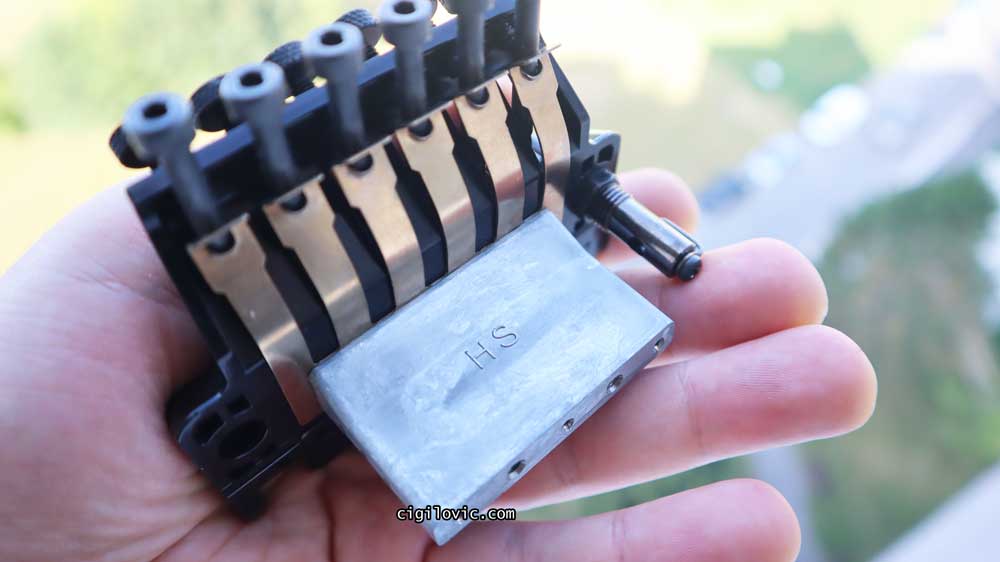
The Original Ibanez Edge Tremolo
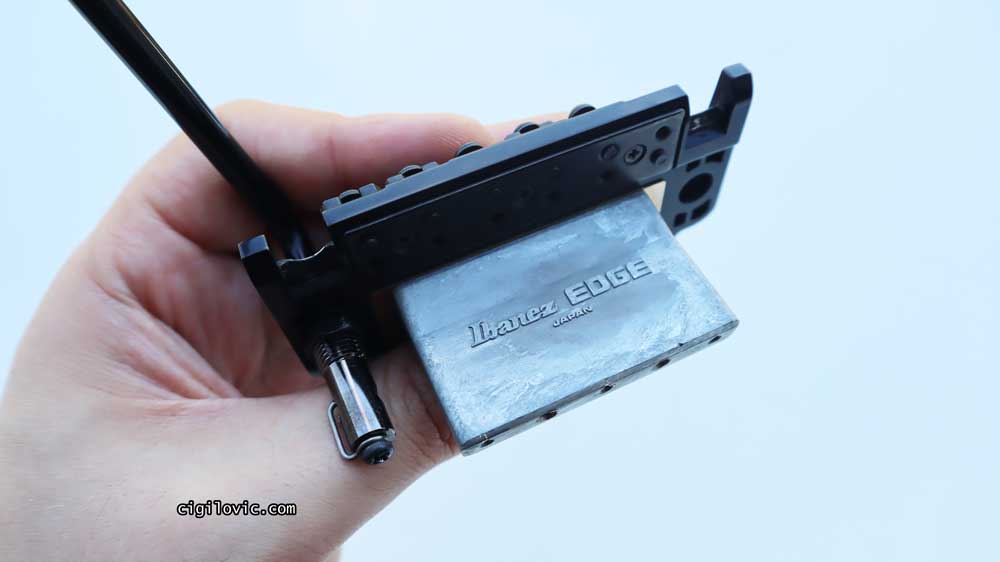
The tremolo is also an outstanding Ibanez Edge model tremolo. To be honest, I’m not a huge fan of floating bridges, but it gives you so many options concerning the amount of expressive control over your instrument. One thing I noticed about the Ibanez Edge tremolo is that the tremolo bar holder piece tends to turn easily, which makes you feel like the tremolo bar comes extremely loose all of a sudden, but then it grabs the walls again and becomes sturdy. When I researched this issue, I found out that the hex screw head in the back of the guitar should be tightened accordingly. Both RG550 and RG565 had this issue out of the box once I used the tremolo bar. It got really loose as the tremolo holder started turning inside the hole.
Only fools keep their cash in a bank account! Let your money work for you with the most trustworthy broker ever!
Earn up to 1000 USD for free and start trading with Interactive Brokers.
Edge tremolo
I understand the tightness of the tremolo arm is a personal preference, but this is actually about the initial assembly. I would actually expect these hex nuts to be tightened out of the factory. Without having both RG550 and RG565, it would not be possible to spot inconsistencies.
Edge tremolo logo
So actually, I had this great opportunity and released a huge article. I’m sure you have never seen such a comparison article on these models back to back. Don’t forget to check out this very insightful article below!
Apart from these little issues and inconsistencies I was able to spot, the Ibanez RG565 is a true gem and an extremely beautiful instrument. As with any RG-style guitar, it is so much easier to play. It almost feels like you are cheating! Don’t get me wrong, these little details are very important if your expectations have been set by the idea that you are buying a Japanese-made Ibanez. However, I think we should take this series as a pretty generic, classic model that may also come with some flaws.
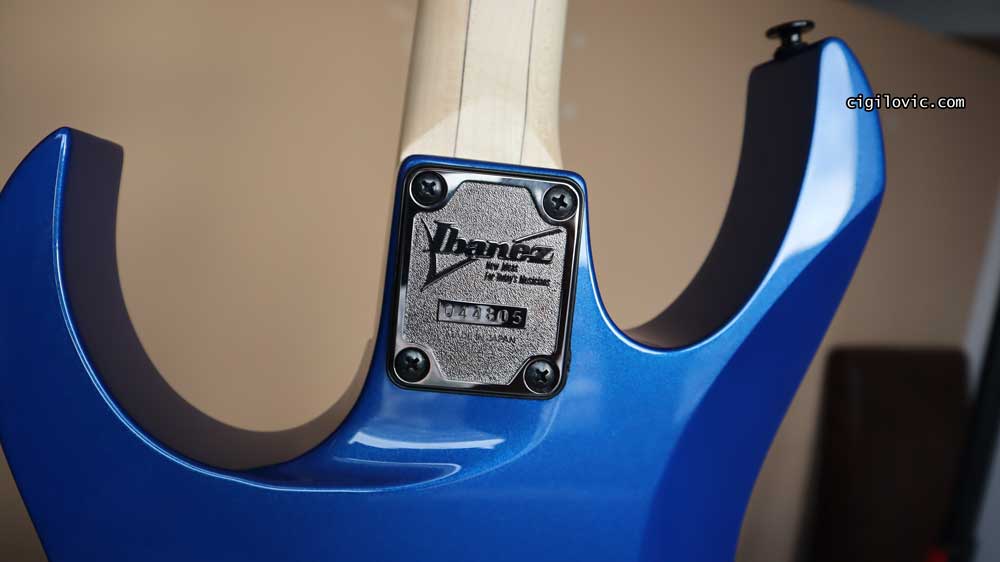
Neck pocket
To be brutally honest, the price tag of these guitars is too good to be true! RG565 retails for around €1171 at Thomann, which is crazy! Made in Japan, authentic, outstanding, and a pioneer in guitar design history, it is now a classic Ibanez RG at this price! Excellent value! Even crazier, some of the RG550 colour options were being listed at just below €900 at Thomann until 2026. Unfortunately, prices are going up as usual. But can you imagine? Below €900, you get a Japanese-made, legendary RG guitar!
Sound Demo (no talking)
In order to provide you with a demo of some of the endless sonic possibilities Ibanez RG565 offers, I prepared a demo video, no-talking style! I used my Ibanez RG565 Laser Blue, ENGL E570 all-tube preamp, ENGL Cabloader and Ibanez Tube Screamer Mini going directly into my RME Babyface PRO interface, recorded in Reaper with some room and chamber reverbs by Lexicon! Note that I am using the factory strings by D’Addario. I think these are some of the worst guitar strings ever! I used them for a long time when I was young, but no more! They immediately start getting corroded. I would definitely restring this guitar for long-term use.
As you can hear from the video, the Ibanez RG565 can deliver a huge array of guitar tones thanks to the unique design with the unique H/S pickup combination and 5-way switch. These in-between positions are unique and generate excellent usable tones for any musical scenario! One of the problems with this pickup configuration is the volume balance between each position. As I mentioned, in the 2nd and 4th position, you split the single-sized humbucker pickup and also have it wired in parallel. This causes some volume drops; however, these positions sound so good with a nice, clean sound on the edge of the breakup and a nice boost (just like a traditional Ibanez Tube Screamer boost).
IK Multimedia Tonex+ - Royal 45 Legends!
Electronics Cavity – Wet Paint
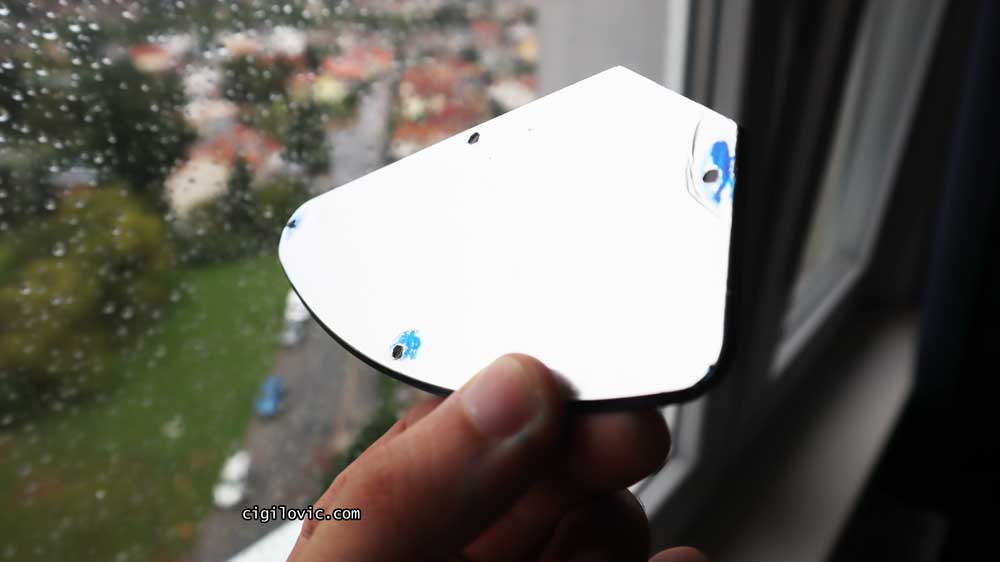
Before I forget, I also want to show you the wet paint issue under the electronics cavity cover. While doing my full inspection, I realised these lighter coloured blue paint marks under the electronics cavity cover. This can also be seen under the tremolo cover as well.
Electronics cavity
Although it looks like a paint job error, it’s more like a wet paint issue. Because you can actually see the marks on the cavity cover, as shown below. My RG550 didn’t have this problem. I think someone was in a hurry at the Ibanez Japanese factory.
If you also want to see my RG565 in a detailed video, I suggest you check out my restringing and instrument care session video below. You can actually see the tremolo cavity paint issue. It’s still not dry! 🙂
Restringing & Instrument Care
Although this is not the best situation, I must say the neck pickup sounds amazing! So creamy and fluid takes the gain so well and sings! Also, don’t forget to check out the costliest article on cigilovic.com, in which I compare RG550 and RG565 against each other with so many details here.
Update: As I mentioned above and also in the comparison article, I decided to return RG550 to Thomann due to sharp fret ends.
I think the amount of sharpness was at an acceptable level, but I did not want to keep a brand-new instrument in this condition. My Ibanez RG565 is staying, though! Flawless craftsmanship! Just before we jump to the pricing and availability section, I’d like to share a guitar cover of one of the best songs by Darkness, featuring my RG565!
Pricing & Availability
Luckily, Ibanez is still making the RG series guitar, but sometimes (as in RG565, maple neck, Laser Blue), they discontinue a specific colour option and come back with a different variation. This also happened to the Vampire Kiss colour option with a maple neck and board. As I mentioned in the article, RG565 got discontinued right after I got the guitar. To be honest, this happens to me all the time with other guitars, too. Yet another excuse to buy more guitars at the last minute! 🙂 Thomann is listing the newer variations of RG565 with Electric, Laser Blue colours as well as the Vampire Kiss colour, but all with a rosewood fingerboard. Also, please be aware that Thomann offers unbeatable prices. I wouldn’t miss the opportunity to get one of these guitars. My favourite RG ever!
You can also check out your local marketplace on Facebook, eBay or any other local websites specific to your location for the used ones, as well as Reverb.com. It’s not always easy to find used ones for a good price. I think it’s a good sign that people don’t want to sell their RG565! 🙂
I hope you find this review article honest and insightful! Thanks for visiting my blog and supporting me so far! I will hopefully see you in the next review here!