- Compact, all in one solution for speaker impulses as well as microphones and power amp simulations
- Combining all the aspects of speakers, power amps and microphones gives infinite number of sounds
- Easy to use, durable build, sounds great
- Features all necessary IO
- Unnecessarily bright blue LED that makes impossible to read anything on the pedal when engaged
- Only buy if you are not a tweaker. Otherwise, this pedal might be overwhelming
- It's impossible to find original positions of the controls in a preset
- Doesn't come with a PSU
Hello there, back again with another review and article for you! In this article, we will be looking at the ENGL Cabloader review and sound demos. ENGL Cabloader is a unique IR loader and DI box with many features. For those who don’t know what an IR is, let’s start with the basic information.
Table of Contents
What is an IR?
IR is an abbreviation for “Impulse Response“. Impulse responses are basically audio files in wave format. These files contain a snapshot of the linear output information for a sonic system, including guitar speaker cabinets, power amps, effects processors, guitar pedals, rooms, and venues. To capture this information, an impulse signal is first sent to the system, and the generated output is captured. This signal is usually a sine sweep that will cover the whole spectrum of audible frequencies for human beings. 🙂 This information is then digitally processed and output to a single file.
Please consider supporting this blog by buying your gear from Thomann using my links at no extra cost to you, many thanks!

Using IRs for guitar speaker cabinets is the new era of guitar recording. But in fact, it had existed even more than a decade ago for guitar players. I remember attempting to use some guitar speaker IRs along with my Koch Pedaltone preamp. Unfortunately, in the early 2000s, I had only access to Core2Duo CPUs and 2 GB of RAM on my desktop. You would still be able to use some guitar speaker impulse responses, but it would be very limiting due to the computer processing powers available. I would always end up with a lot of crackling noises. Especially when you add a VST effect to the chain, it would almost be impossible to play with direct monitoring.
But even in this situation, it was so much different from using your built-in speaker emulation found on preamps or processors. When we think about guitar amps, we always focus on the preamp and how much gain it may generate. But in fact, guitar amps consist of 3 major components: preamps, power amps and speakers. These combined can actually generate the guitar sounds we admire. However, in real life, it’s not always possible for everyone to build a solid guitar setup and mic it at particularly high levels of volume at home or in small studios. Back in the day, I remember dreaming about a guitar pedal that could receive my favourite guitar speaker IRs via USB and could be carried and implemented into any guitar setup on the go. 
Luckily, guitar amp & pedal manufacturers have realised the power of impulse responses and have been manufacturing impulse response pedals as well as implementing impulse-response-friendly guitar amps, processors and pedals.
Do I Really Need an IR Loader/Pedal?
The short answer is no! It’s possible to have the same effect as an IR loader pedal that features guitar speakers, power amps and microphones in your digital audio workstation for free! To do that, just simply find an IR loader and power amp emulation VST plugin, as well as a freeware guitar speaker IR.
My favourite ones so far by Ignite Amps! Just simply go to their website and download NadIR (Impulse Response loader) and TPA-1 (Power Amp emulator).
These still work perfectly for the same effect in your guitar signal chain when used within a DAW. However, if you want to have a dedicated pedal for this, you should definitely keep reading and find out why the ENGL Cabloader is one of the best options out there! In order to present you with the differences between old-fashioned cabinet emulation and the modern IR approach, I prepared a comparison video. In this video, you can listen to ENGL E570 built-in 4X12 speaker emulation, NadIR IR loader with TPA-1 and also ENGL Cabloader samples.

ENGL Cabloader
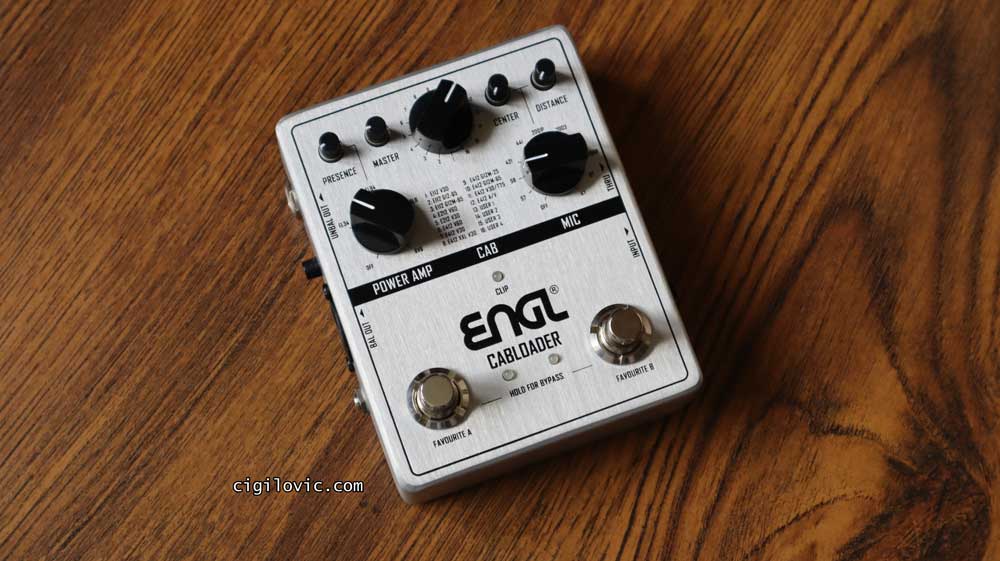
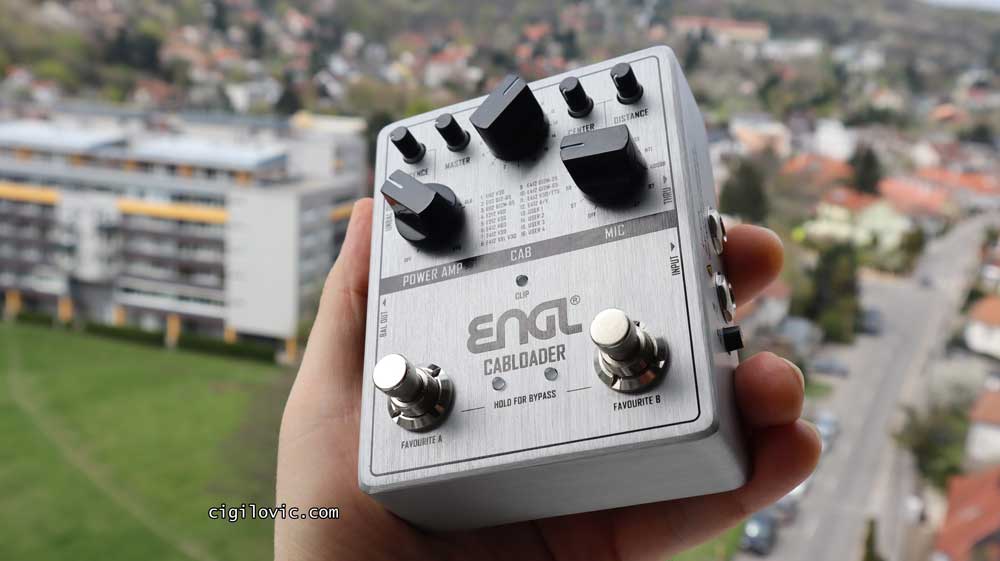
ENGL Cabloader is a full-blast IR loader pedal and a DI box. It’s one of the best solutions for DI recording setups for guitar players. It comes with 12 impulse response-based guitar speakers, 4 power amps and 10 microphone simulations. You can also tweak the microphone positions with distance and centre knobs, just like you can do in virtual amp/speaker simulators.
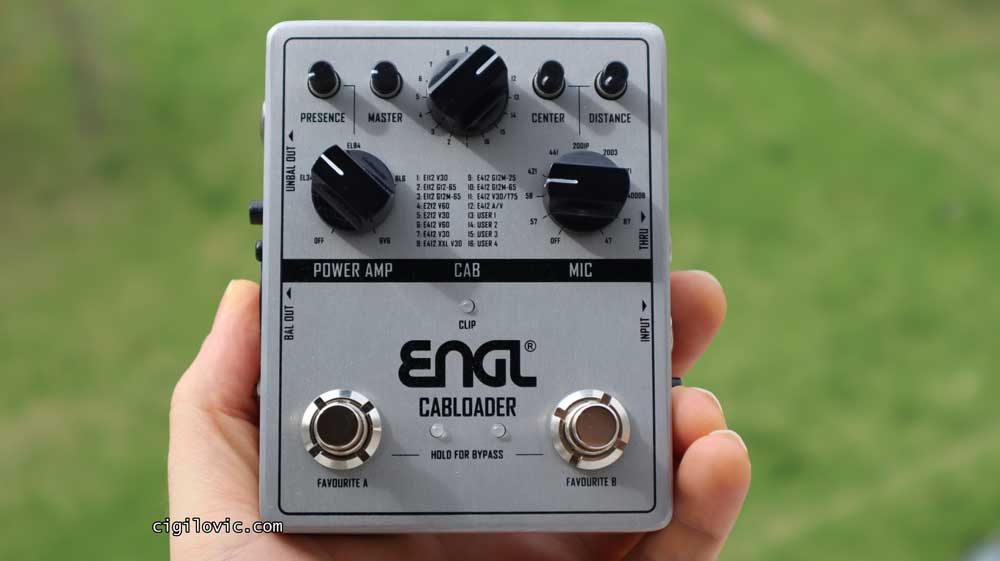
It also features a presence knob (for the power amp) and a master volume knob for overall adjustments to your sounds.
| ENGL Cabloader | Features |
|---|---|
| # of speaker cabinet IRs | 12 built-in ENGL based speaker cab models |
| # of 3rd Party IR slots | 4 (via USB using ENGL Cabloader Software) |
| # of power amp simulations | 4 (EL84, EL34, 6L6, 6V6) with adjustable presence |
| # of microphone models | 10 with adjustable distance and centre |
| Input selection | Instrument or line level |
| DI Box | Integrated DI box with XLR out and ground lift |
| THRU output | THRU for using in amp's effects loop |
| Headphone output | Dedicated headphone output (1/8") |
| Preset save & recall | 2 footswitches for favourite + 1 default (Total 3 switchable) |

Packaging
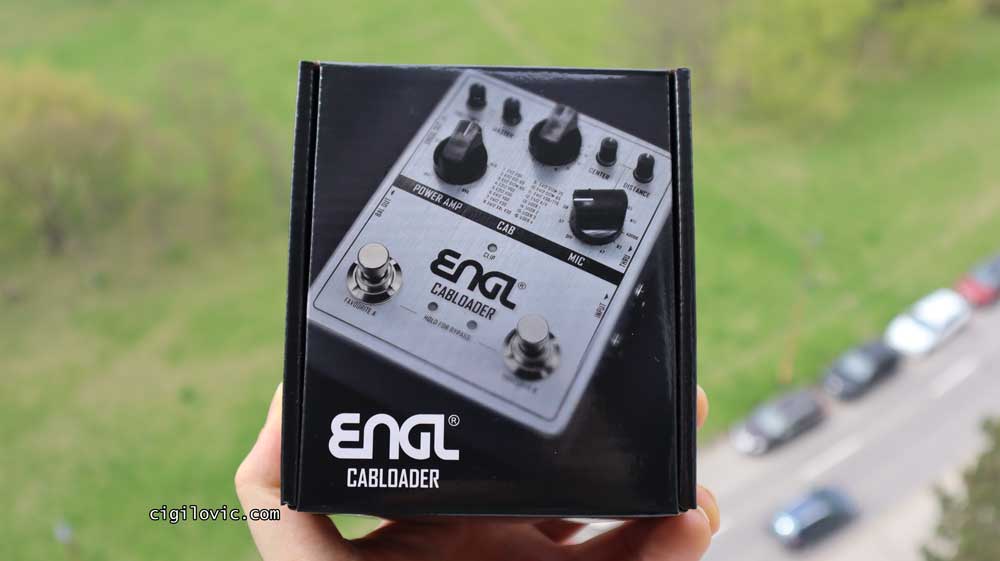
Cabloader comes in a nice, sturdy package as shown in the images below.
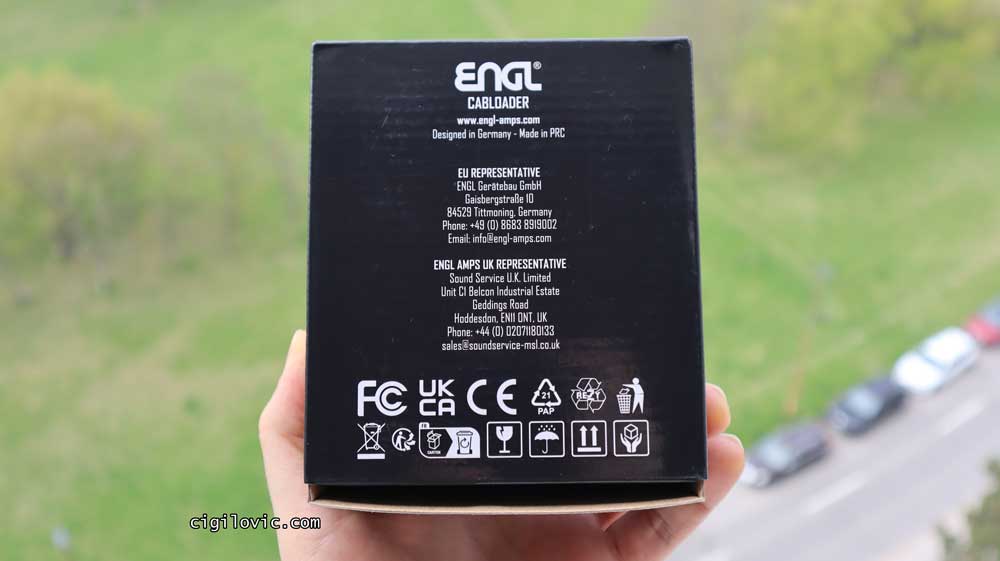
At the bottom of the box, you may see the information regarding ENGL UK and EU distributors. You can also clearly see the country of origin information. Unlike some companies in the industry, ENGL clearly labels their products with this information.
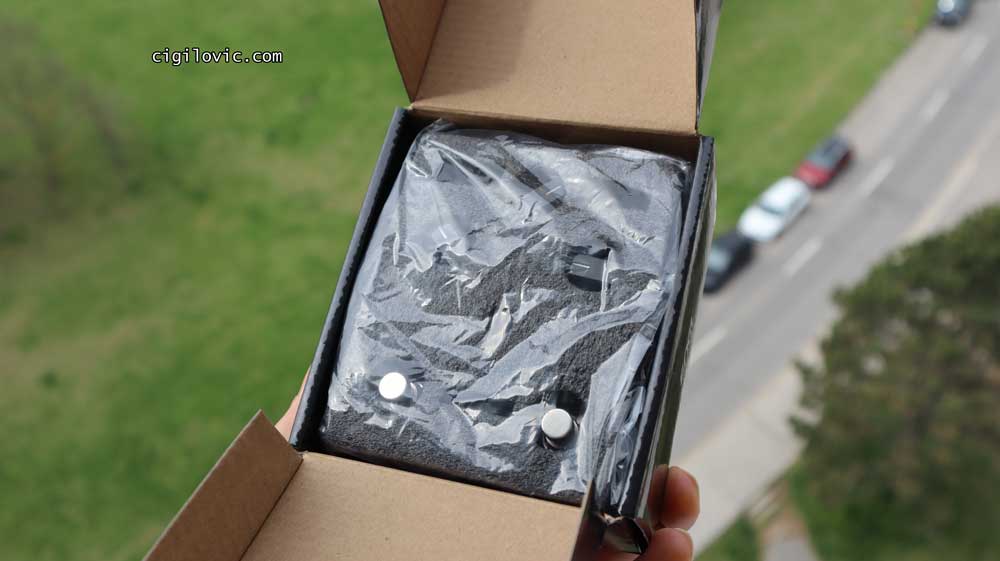
They also added a foam to protect the knobs and switches on the pedal. I think it’s a nice touch by ENGL.
The box only contains the actual unit and the mini manual. Unfortunately, no USB cable comes with the product.
Input & Output Section
Cabloader is equipped with all the necessary inputs and outputs for a variety of possible connections. On the right side, you have your Input and Thru jacks. Input also has a mini button to adjust the input level for either instruments or a line-level signal.
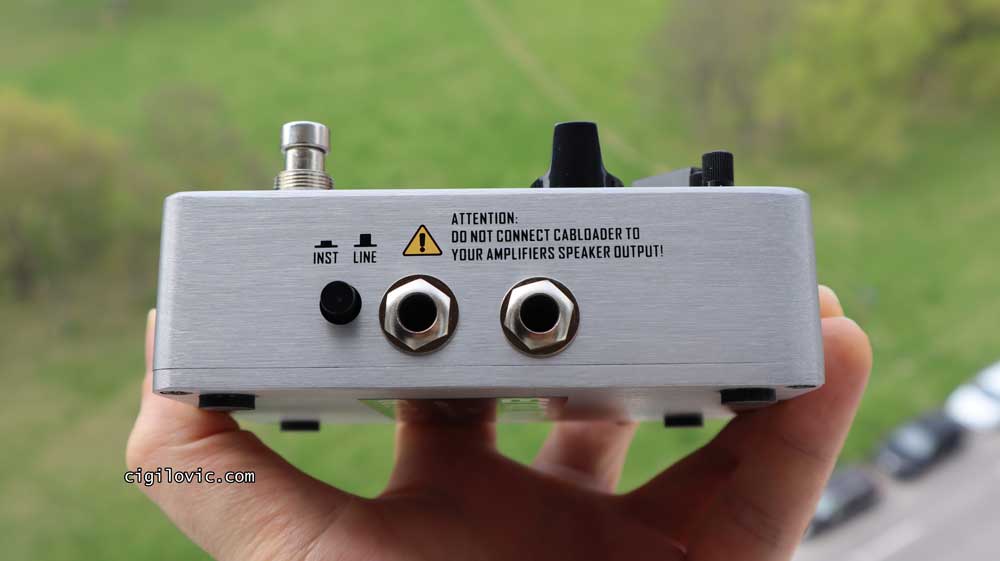
You can use Thru out as an output without any IR applied, and send this to your DAW in addition to the output of the Cabloader (with IR applied). This way, you can apply other IRs or Power Amp simulations in your DAW, optionally. Last but not least, there’s a warning for those who may use this as a load box. Please don’t! You can not connect your tube amp’s speaker out to the ENGL Cabloader. There must be a load in between to prevent damaging the amp.
On the left, you have your outputs. As you can see, there’s an unbalanced 1/4″ and a balanced XLR output. ENGL also offers a stereo phone output for silent practising, which is really cool.
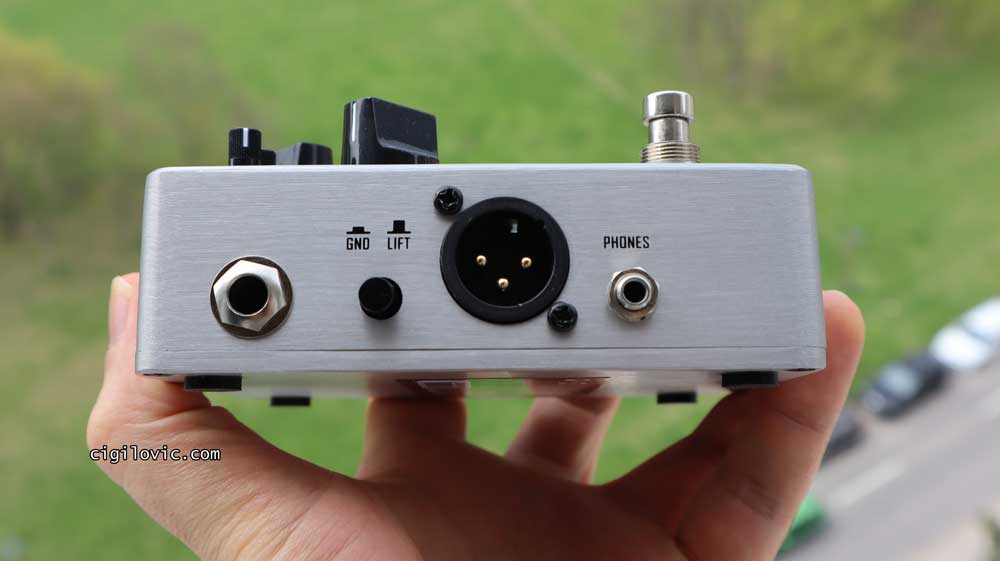
There’s also a ground lift button placed next to the XLR output.
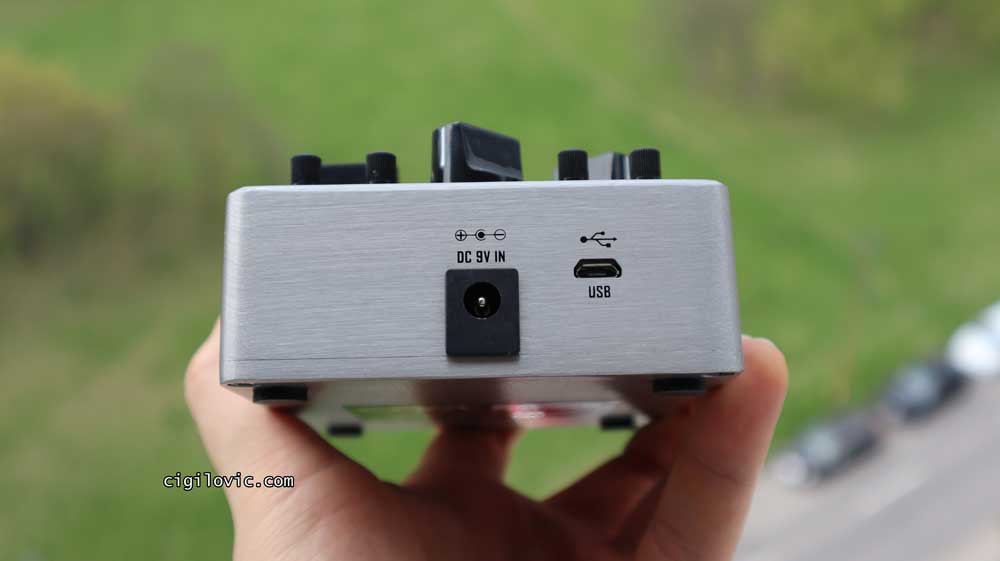
Lastly, on top, you have your 9V DC input and the USB-C input as well. As you can imagine, there’s no battery compartment available, so you need to have your power supply ready for this (there’s no PSU that comes with the unit).
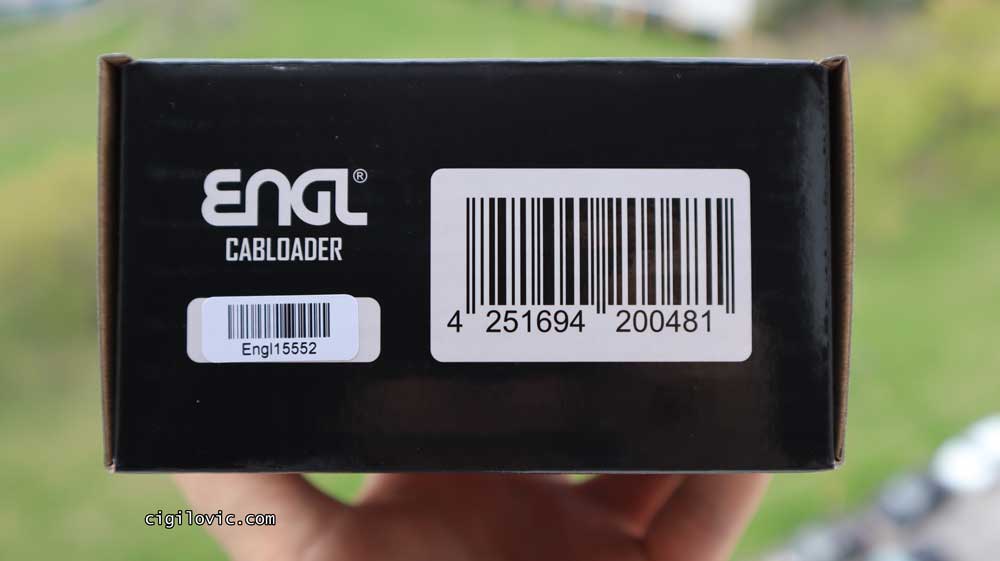
Bonus photos: On the bottom chassis, you have a simple label mentioning the country of origin information, as well as a barcode that features the serial number.
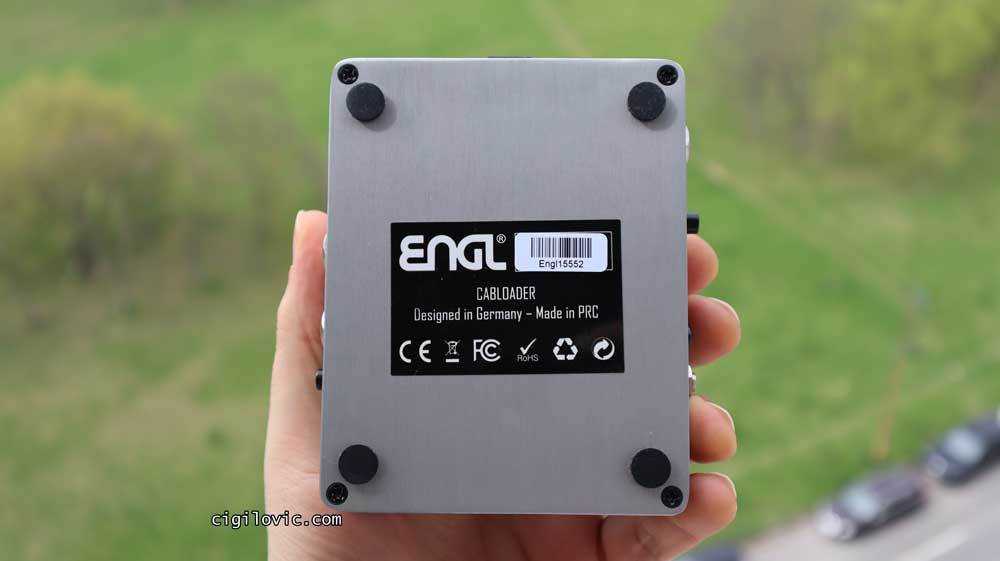
For the actual ENGL Cabloader barcode, you need to refer to the box.
How to Save Settings to Footswitches?
On the pedal, you will also have 2 footswitches to which you can assign your favourite settings. Just adjust the settings to your liking, then press and hold the footswitch that you want to assign your settings to for 3 seconds.
Loading 3rd Party IR files to ENGL Cabloader
Cabloader also allows you to load up your 3rd party IR files via USB using their ENGL Cabloader Software. Once you have downloaded the setup, just install it on your PC or MAC. Then simply connect your Cabloader with a USB cable (not included). The first time you connect your pedal, it will show 4 empty slots. Simply use the “+” button to load your 3rd-party IRs. That’s it! 🙂
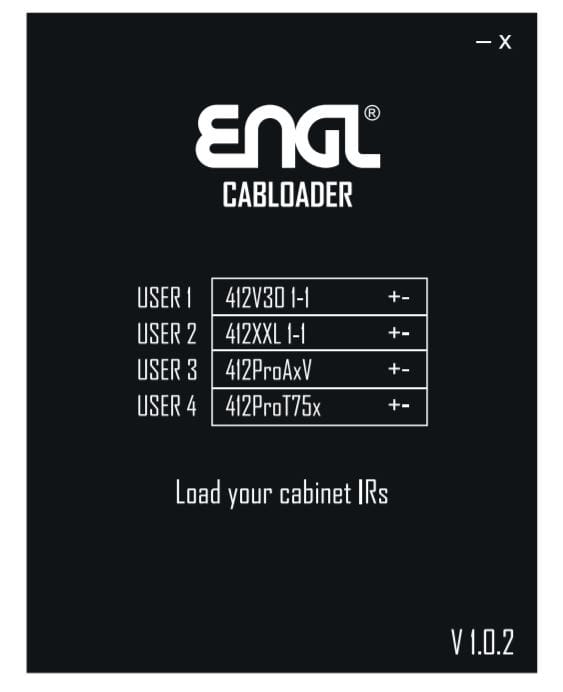
Note that you may have volume differences when using 3rd-party IRs. When I tried this feature, my 3rd-party IRs generated less output. In the next section, I will provide you with full tech specs in a table, as well as the built-in speaker and microphone models.

Tech Specs
| ENGL Cabloader | Tech Specs |
|---|---|
| Outputs | 1 x 1/4“ Unbalanced, 1 x XLR, 1 x THRU, 1 x Headphone |
| USB Port | Micro-B |
| Sampling Rate | at least 44.1KHz |
| Sampling Accuracy | 24bit |
| SNR | 100dB |
| IR Format | .wav |
| Sampling Length | 1024 Samples (23.22ms) |
| Power Requirements | 9V DC 300mA |
| Battery Powered | No |
| Power Adapter incl. | No |
| Dimensions | 120mm(D) x 95mm(W) x55.5mm(H) |
| Weight | 409g |
| Accessories | Owner’s Manual |
Factory Speaker Cabinet IRs
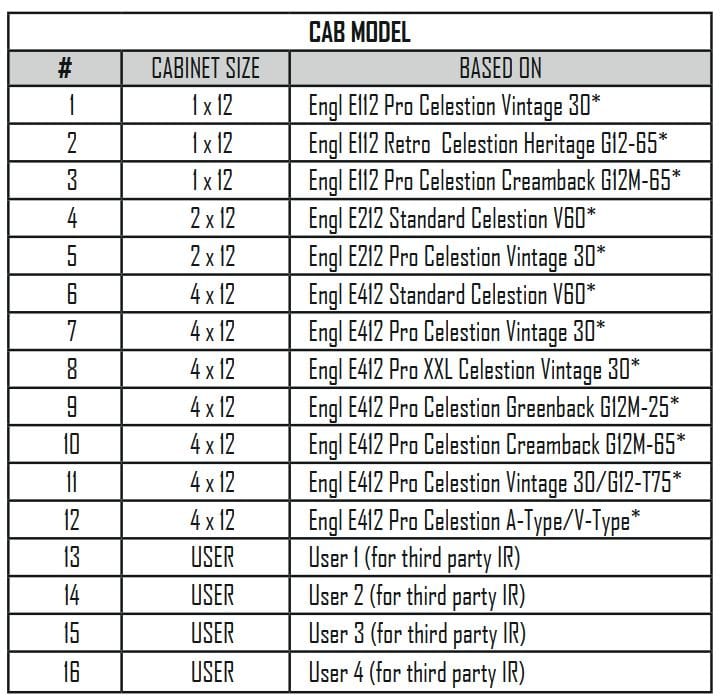
ENGL Cabloader features 12 speaker IRs based on ENGL’s own guitar cabinet speakers.
Microphone Models
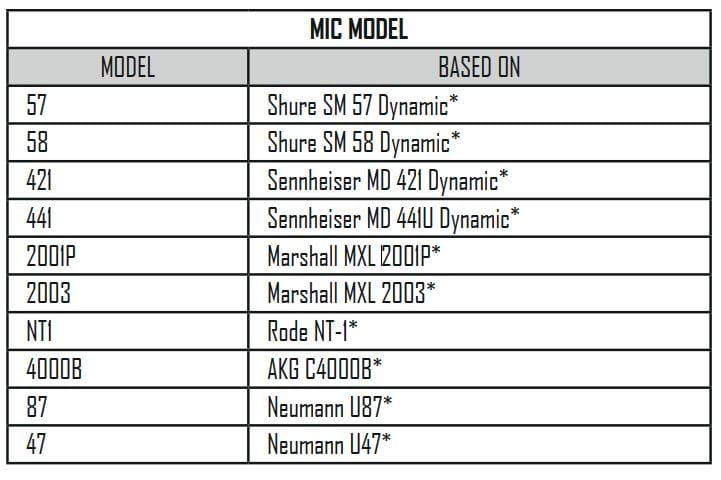
ENGL Cabloader also features 10 microphone models that have been widely used in guitar recording setups.
Power Amp Models
ENGL Cabloader features 4 different power amp models: EL34, EL84, 6L6 and 6V6. You can also set power amp emulation to off, just like you could with microphone models.
Sound Demo (no talking) – feat. ENGL E570 Preamp
With the possibility to have 12 speakers, 10 microphones with distance and centre parameters, as well as 4 different power amp models, you can imagine how many sounds and variations you can make! In order to give you a full overview of every variation, I have made a demo video and gone through these combinations using the same set of guitar parts. In this video, I have used my Schecter Hellraiser Hybrid PT-7, Fender American Standard Stratocaster and Ibanez SRC-6, along with my ENGL E570 tube preamp.

Sound Demo (no talking) – feat. Marshall Plexi
Note that I purchased an ENGL Cabloader again to test this time with my other preamps, tube amps and reactive loads. As promised, here’s another demo video of the Cabloader, this time featuring my Marshall Studio Vintage SV20H, Suhr Reactive Load and my usual loops via Boss RC-5.

Verdict
If you have been playing and recording guitar for long enough, you would already know that we used to stick with built-in digital or analogue speaker cabinet emulations that came with guitar processors or analogue preamps. Unfortunately, the analogue approach was never successful with the emulation of guitar speaker cabinets. As far as I understand, this was due to having left out very important components of much-loved guitar tones, power amps and microphone positions. Thankfully, in today’s world, you can either buy individual impulse response-based guitar pedals or just go for free or paid software solutions.
Only fools keep their cash in a bank account! Let your money work for you with the most trustworthy broker ever!

ENGL Cabloader is one of the best out there among other options. Most people who are after an IR pedal specifically are looking for a pedal that can provide them with guitar speakers, power amps and microphone models. But if you carefully inspect other products available, you will notice that many pedals also feature preamp simulations. You will also find out that some of them will not give you power amp emulation options. The reason I have bought an ENGL Cabloader is to use it with my favourite tube preamp, the ENGL E570. (I’m not endorsed by them; I paid for these 🙂 )
ENGL E570 was available since the early 2000s, and it was discontinued in the early 2020s. You can imagine the analogue approach I have mentioned above was pretty much the only thing you could implement into a tube preamp back in the day. Therefore, I have to say E570‘s built-in speaker emulation is not really successful. It still works, and if you had only your E570 and a pair of multimedia speakers, you would still be able to play and enjoy your guitar. But it doesn’t really sound as good as impulse response-based speaker cabinets.
Another reason is that I didn’t really want to spend money on an IR-based pedal that also gives me preamp simulations. Since I wanted to base my guitar tones around ENGL E570, Cabloader was the best choice for me. As I have mentioned in the beginning, you can have the same effect with free VST plugins. However, it’s only good for recording a few tracks and playing the guitar through your speakers. When you have dozens of guitar tracks with VST guitar amp plugins, IRs, effects, etc., even my i7 laptop was stuttering in most cases. So, having this digital solution outside of my computer system has been really a good decision for me!
ENGL Cabloader provides so many combinations for your direct recording scenarios. It’s extremely versatile and makes everything so easy when going for direct recording. Every parameter you change, whether it’s the speakers, power amp tubes or microphone models, will yield completely different results. I think for guitar players, it gives an infinite number of possibilities. When I first bought my Cabloader, I also ordered a Truetone 1 Spot 9V/DC power supply. I was very excited with the results, and this actually made me play more and more every day.
But one day, I switched on my E570 and plugged in my Truetone 1 Spot 9V/DC adapter into a wall socket. And surprisingly, nothing worked except the preamp. I tried it with other wall sockets. But there was no light coming out of the Cabloader.
Unfortunately, I had no alternative ways to test it. Sadly, I had to return these items to Thomann. After they inspected the items, they found no issues but sent me new replacement items in a matter of days! That’s why you should always prefer Thomann for your musical instruments & accessories purchases.
Check out my “Why Thomann is the best musical instruments store?” article here.
This time, I had no issues and have been using my ENGL Cabloader since then. However, I have ended up with a decent amount of hum being generated. I suspect Truetone 1 Spot 9V/DC is causing this. The reason I think this way is that the replacement adapter generates a high-frequency signal alone when plugged into a wall socket. Sounds almost like a siren!
Check out my “Truetone 1 Spot 9V/DC” review and find out about the weird noise!
Currently, I’m using my Cabloader with Voodoo Lab Pedal Power X4 and have had no issues in terms of noise! ENGL Cabloader is made in China; nothing wrong with this. However, I find the price tag a bit too much considering the fact that you have to buy a power supply and find a USB cable to load your 3rd-party IRs. Or I would justify the price if it were made in Germany, as usual, by ENGL. Also, the knobs are a bit funky. For instance, when you want to choose a power amp emulation, it sometimes doesn’t lock in that position easily. I reckon these are not the highest-quality parts ever. 🙂 
But at the end of the day, ENGL Cabloader has cutting-edge features and really stands out in the competition. It exactly fits my purpose and has already made a huge difference to my guitar tones. It is something I can totally recommend with full confidence! In my opinion, speaker cabinets play a huge role in achieving completely different guitar sounds just by using the same setup. As I found myself trying out external IRs, I noticed ENGL Cabloader is pretty limiting in this use case. Because at the end of the day, I should try external IRs long enough and then migrate them to my IR loader pedal. But as you already know, Cabloader only allows 4 external IRs up to 23ms.
So with these in mind, I started looking for alternative IR pedals and noticed TC Electronic’s Impulse IR Loader pedal. I have just posted a very detailed article. Please consider reading it before you make your decision about your next IR loader pedal. I still think ENGL Cabloader is an excellent pedal if you just want to control everything on the pedal interface and come up with your own custom settings. However, it did not work out for me in a more flexible way of working.
Check out my TC Electronic Impulse IR Loader review here
Alternatively, Two Notes Opus should also be considered, as it comes with the legendary dynIR software, basically giving you an infinite number of IRs. Plus, it’s way easier to upload many external IRs and test them.
Pricing & Availability
As with any ENGL product, your best bet for them is to check out Thomann. ENGL Cabloader, as well as any products from the ENGL catalogue, is widely available on Thomann year-round.
Check out ENGL Cabloader on Thomann here
You can also have a look at Reverb.com, as there are many resellers as well as individual sellers sometimes listing Cabloaders.
Check out ENGL Cabloader on Reverb here
I hope you have enjoyed this article, and this has helped you make your purchasing decision for your IR pedal for guitar recording! Thanks for visiting my blog and supporting me so far! I will hopefully see you in the next review here!