Hello there, and welcome back to yet another great article for you! This time, we will be looking at possibly the best value/money DI box in the market, Radial Engineering Pro DI. In this detailed review article, I will introduce you to this very successful brand, Radial Engineering, as well as provide some in-depth analysis of this DI box. For those who have never heard of the company, let’s have a quick introduction.
Table of Contents
About Radial Engineering
The company’s founder, Peter Janis, started his journey in the MI industry back in 1976 in Montreal, Canada. Being a keyboard and guitar player, he spent the majority of his time on the road as a musician. He eventually switched to the MI industry after he was hired by TMI back in 1980. After having worked for 10 years in TMI (which was the main shareholder of Fender at that time), he started his own company in 1990. Peter was mainly providing services to a company called Cabletek, and later on, he used the opportunity and take over the company, renaming it Cabletek Electronic Ltd.
He was mostly importing products from leading brands such as Presonus, Audix Microphones, Hafler, Microtech Gefell, Mogami cables, Jensen Transformers and Sonex. However, he was more into building a company that could go global; therefore, he launched the Radial Engineering company in 1996. Since then, Radial Engineering has been considered possibly the most reputable pro-audio company, bringing solid resolution to the problems in the audio field. For most musicians and audio enthusiasts, Radial Engineering is synonymous with DI boxes. It’s possibly the first brand that everyone thinks about when they consider buying a DI box! 🙂 The company has around 100 employees, combining all R&D, engineering and production in the same facilities, and all Radial Engineering products are made in Canada, available to any musician anywhere in the world via their excellent network of dealers. 
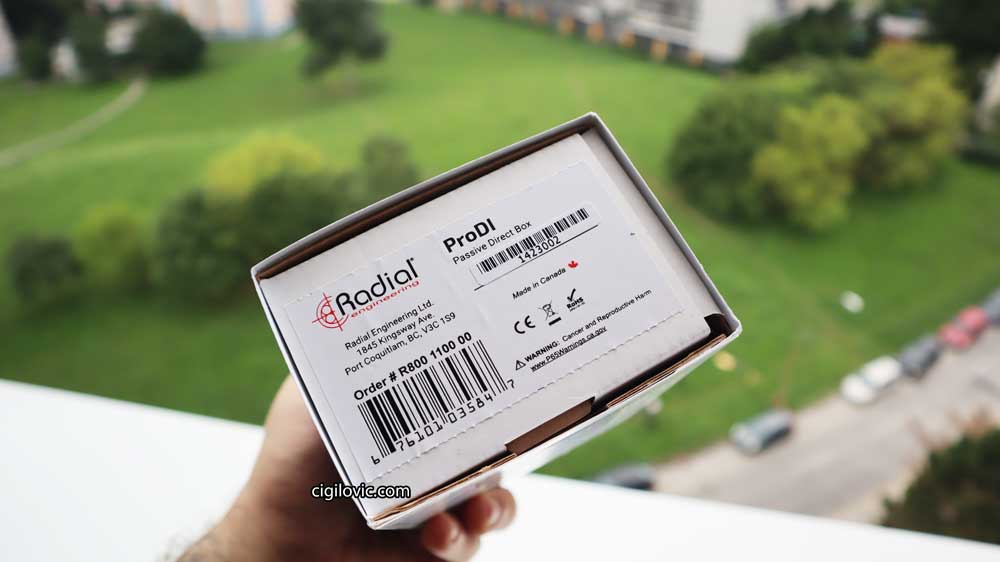
Before we go into details about the Radial Engineering Pro DI, let’s get the basics right!
What is a DI Box?
DI Box stands for Direct Inject and first came out of the need to resolve impedance mismatches between electric instruments such as electric, bass guitars, keyboards and more sensitive studio gear. Even though there are countless DI boxes in the market with different features, it takes the unbalanced, high-impedance signals and converts them back to the balanced, low-impedance signal. By implementing a DI Box in your rig, you can, for instance, directly plug your guitar into a mic preamp and also send this signal over long distances without any degradation in the signal quality and volume. There are 2 main types of DI boxes you will come across in the market: passive and active. Passive DI boxes require no power to operate, whereas active DI boxes do and also allow you to adjust the signal level. 
Why Do You Need a DI Box?
Many operations require DI box usage. For instance, you may need to send your guitar signal to a mixer while also playing your guitar through your amp, then you need a DI box to split the signal and transmit it back to the mixer with the correct impedance. However, if you are a bedroom guitar player and just want to plug your guitar into your audio interface that has an instrument input, you would not need to get a DI box. In today’s world of guitar amp simulation software and plugins, you just basically need a decent audio interface to connect your instrument to your computer. However, the basic usage of the DI boxes can save a lot of time, especially if you need to keep the dry signal of your instrument in your DAW.
Why Did I Get a DI Box?
As you may have noticed, there is tons of content on my website. They are mostly blog posts with photos and, if possible, demo and test videos of some gear. As I was also leaning towards featuring more effects/amp software on my blog, I started thinking about a new setup which would allow me to enjoy making some more musical demos and reuse them for various projects. Recently, I ordered a bunch of gear from Thomann, including a Marshall JMV410H tube guitar amp. I also got myself a RedSeven Amp Central load box/IR loader and a Two Notes Captor load box. I would like to base my setup around a proper tube amp and also use my lovely ENGL E570 and Mesa Boogie TriAxis preamps within this setup. However, while going the direct recording route with my preamps, I noticed that I needed to keep dry signals of my recordings, as recording separately for each plugin or effect review takes a lot of time. I was also planning to get a reamp box and possibly experiment with these for reamping my tube preamps and amps. 
Radial Engineering Pro DI
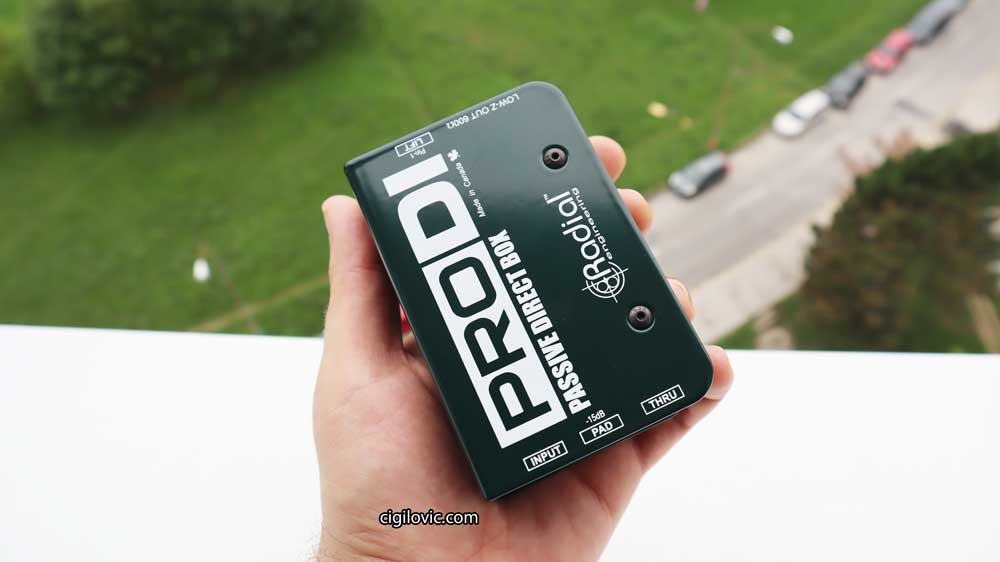
Radial Engineering Pro DI is a passive DI box that doesn’t require a battery or power supply to operate. It’s a plug-and-play device and takes a few seconds to figure out how to use it! It features a high-quality, custom-designed transformer for impedance matching. It is designed to eliminate noise, split signals, and convert unbalanced signals to balanced ones, as well as reamping! Yes, you heard it right! Even though Radial Engineering has a solid line of products for reamping, they openly mention that Pro DI can also be used for reamping when connected backwards (but under the condition that one should be careful about the levels!). It features a custom-wound Radial transformer that comes with a high 140kOhm impedance to reduce loading so it can handle extreme signal levels at all frequencies without adding any distortion to your sound. Pro DI design also implements a MuMetal® shield to protect against electromagnetic fields that cause the transformers to distort.
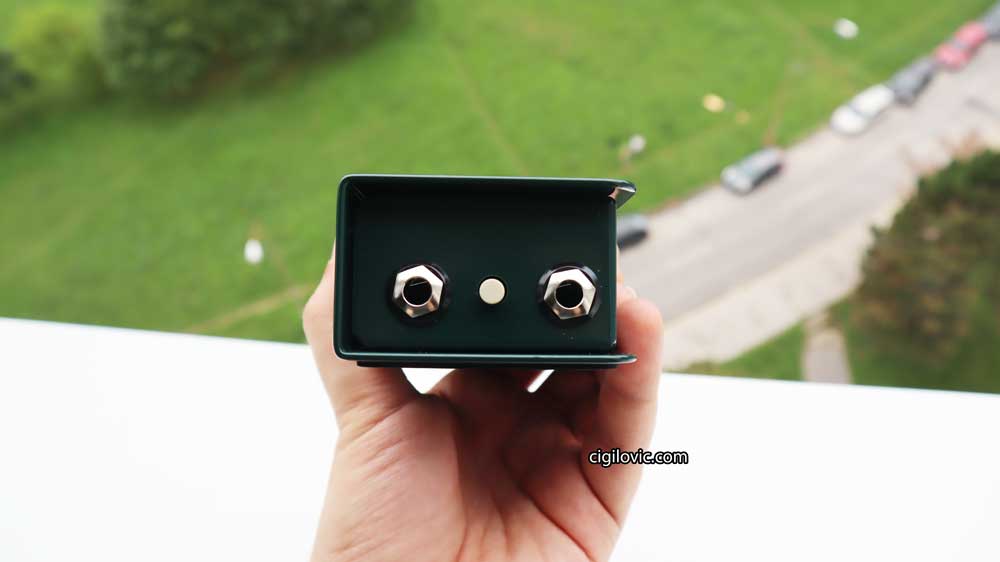
Note that Pro DI series products were designed to reach average musicians who don’t have the highest budgets for excellent quality that Radial Engineering offers. Naturally, these DI boxes were mostly used by professional touring musicians. With this in mind, Radial custom-designed a transformer that has become the core of the Pro DI series. Do not think that this is an affordable and low-quality counterpart of their product. Legendary artists such as Herbie Hancock, Rush, U2 and Lady Gaga all used Pro DI while touring! 
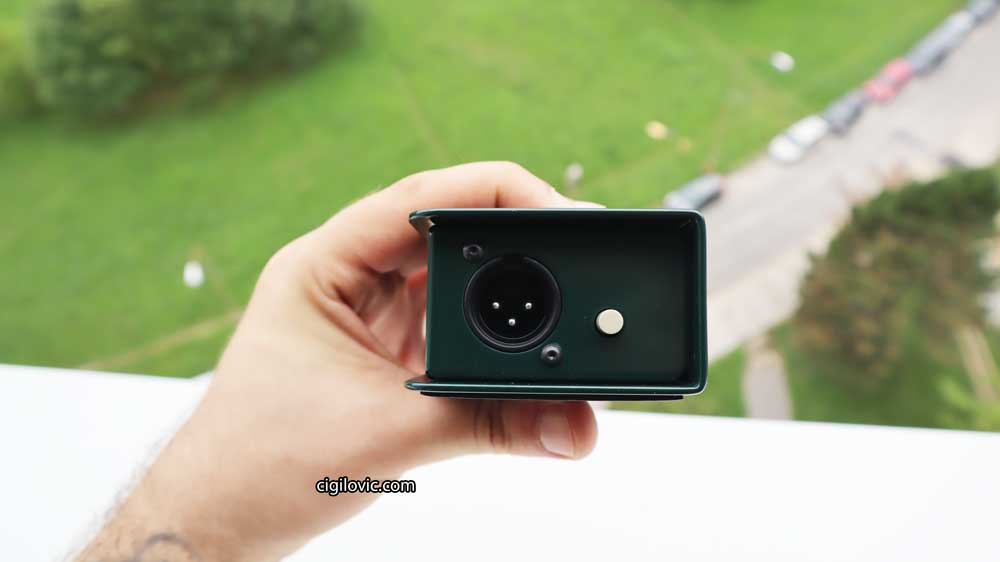
How to Use Radial Pro DI?
As I mentioned, what I would like to achieve is to I can send my dry guitar signal to my DAW, especially with the records I’m working on for demoing purposes, so these can be reused for other purposes. Here’s a quick flow of my current rig.
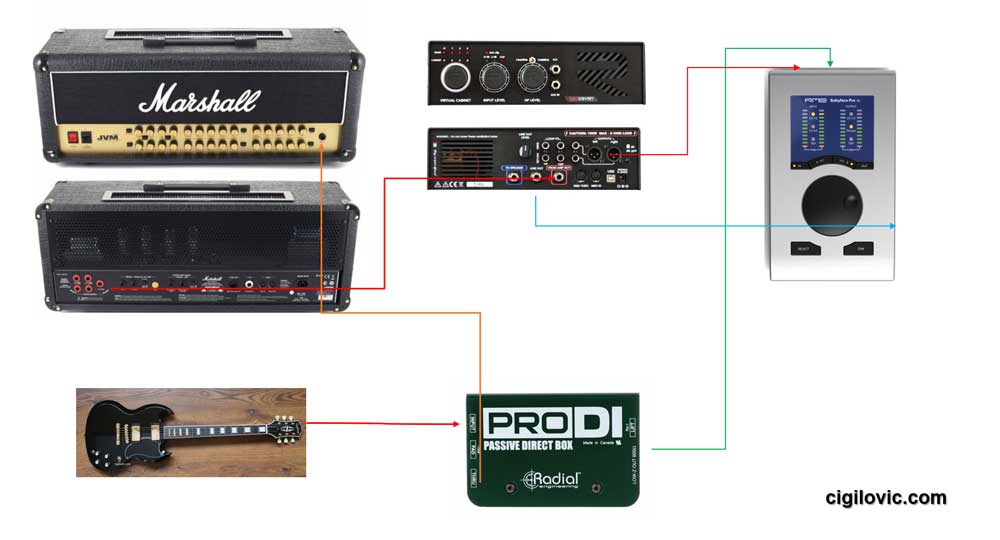
While connecting my setup this way, I already started thinking about how I could test the DI box in terms of clarity and quality in the recorded dry signal. This test would probably help my visitors with their purchasing decisions, so here we go!
Review
To test some of the connections, I prepared a demo video for you below.
Guitar via Pro DI vs Guitar Direct to Amp
The first thing that comes to my mind is how well the Pro DI maintain the dry signal while using Radial Engineering Pro DI as a splitter and sending it to the DAW. To test this, I recorded a quick riff with my Epiphone SG Custom. The guitar is plugged into Pro DI, and then the guitar signal goes to my Marshall JVM410H via the Thru connection of the Pro DI. The same riff is also recorded going directly into the amp. So we can understand if splitting the guitar signal using Pro DI has any impact on the guitar signal itself. I listened to this part and tried to spot any differences, but I could not! Let me know what you think! I think Pro DI can split the signal without any loss in quality and operate very smoothly in this scenario. I think this is crucial, as this use case is the ultimate measure of the success of a DI. I must say I’m pretty impressed by that! 
Pro DI Test

Pro DI Signal vs Guitar Direct to RME Babyface Pro
The second test I would like to run is how this dry signal recorded via this DI stands up against a guitar signal directly recorded via the RME Babyface PRO audio interface. As the RME Babyface PRO is one of the best audio interfaces out there, I had doubts that the Pro DI could compete with it. However, based on the results, I think it did pretty well. However, if you listen carefully, you will hear some additional top end on the signal directly recorded via Babyface PRO. The reason may be that we use RME’s preamp, so it has its colour. But the difference is not so huge in my opinion. So another plus for Pro DI!
Pro DI Signal through Guitar Amp Software
I also wanted to quickly test how this dry signal recorded via Pro DI works out in a guitar amp software. I did not aim to compare my Marshall head with a software version, but just wanted to see how it would sound. So I added IK Multimedia Amplitube 5 to the track and just added Joe Satriani‘s signature JVM model in the software. As you can hear from the video, it works perfectly fine! That was possibly my main goal to get the Radial Engineering Pro DI. Just imagine, I spend a lot of time creating music for demoing my gear, but I also want to use the same tracks for demoing software plugins. It immediately solves my problems! 
How to Reamp with Pro DI?
I think that’s the question of the century! 🙂 There are tons of posts about this; some people say you can not reamp with Pro DI, and some say you can! I think I would only rely on the comments from the manufacturer! Radial Engineering openly mentions this on their FAQ, that you can reamp with Pro DI or any other DI Box they manufacture. However, figuring out the connections is not the easiest task. That is the reason they also manufacture variations on their DI Box range and position these products as reamp boxes! However, I was not able to figure out how to reamp using this DI box and, more importantly, RME Babyface PRO. The reason I’m saying this is that RME Babyface PRO and its best companion, TotalMix FX, are not so easy to figure out.
If I had Radial Engineering Reamp boxes, I would still have the same confusion about how to route audio internally using my current rig. At the moment, I’m trying to understand TotalMix FX better and hopefully resolve this and provide a separate article. I want to be able to demo this and provide you with a comparison between the directly recorded amp sounds vs reamped amp sounds, so please stay tuned!
Verdict
Overall, I’m very satisfied with my purchase, and I can recommend Radial Engineering Pro DI to anyone without a single doubt. It’s one of the most affordable, authentic and high-value/money DI boxes in the market. If you want to invest more, you can choose their JDI line products as they feature Jensen transformers. But unless you are making a living with audio engineering, I don’t think you will benefit from the improved DI signal quality. But it’s totally up to you! As with any Radial Engineering products, they are built like a tank and will possibly be in operation when we are all gone! So never doubt the quality of their products!
Radial is a brand that I always think of when someone mentions a DI box. I think this says a lot, and I believe it’s true for most musicians. Their products may seem to be pricey, but actually, these are extremely well-built and will serve you for a lifetime. 
Pricing & Availability
As you can tell, I got mine from Thomann while trying to build my rig, as illustrated above with other gear. Since these are made in Canada, it’s not always easy to find every single item from Radial’s catalogue on Thomann. But usually, they keep the most critical products in stock.
Check out Radial Engineering Pro DI on Thomann here
However, feel free to check out Reverb.com as well, as you may find great offers in the used market.
Check out Radial Engineering Pro DI on Reverb here
I hope you find my brief article helpful, honest and insightful! Thanks for visiting my blog and supporting me so far! I will hopefully see you in the next review here!
Post your comments and feedback here
By submitting a comment, you accept that you will be automatically included in the newsletter. You can always opt out in case you are not interested in the content updates.