- Excellent build quality
- Unmatched price/value ratio in its era
- Even better consistency from their US counterparts
- Pickups could have been better
Hello there, back again with another real, honest and long-term review of Fender Standard Stratocasters, which were made in Mexico back in 2013-2015. During my service in the musical instruments industry, I had countless chances to play, record and test these beautiful instruments. In this review, I will be going through Fender Standard Stratocasters with maple fingerboards (SSS) and maple & rosewood fingerboards (HSS). In my opinion, these guitars offered really good value for money in their era compared to Stratocasters. The quality assurance and consistency were top-notch!
Table of Contents
Even though these were step-back models from American Standard and considered beginner guitars, every time we sold and tested them, we did not notice any flaws! I should even confess that they were most of the time more consistent in terms of build quality in comparison to American Standards. By the way, I have recently purchased a Fender American Standard with a maple fingerboard (SSS) from this era, and I am working on a full review of this instrument. So if you want to get notified when I have published it, please subscribe to my mailing list so I can inform you 🙂
Please consider supporting this blog by buying your gear from Thomann using my links at no extra cost to you, many thanks!

One thing I really like about this era is that there was no problem regarding CITES (the Convention on International Trade in Endangered Species), which meant Fender and other companies were able to use a really nice grade of rosewood. With the density and attack characteristics of the fingerboard material (for rosewood), the figures on the wood did not even feel cheap!
Fender Standard Stratocaster replaced by Fender Player Series!
During CITES days, Fender Standard Stratocasters were replaced by Fender Player Series, which used Pau Ferro wood on the fingerboard rather than rosewood. In my opinion, fingerboard and neck material are one of the most essential parameters of an electric guitar’s overall sound and feel.
If you think about it, the fingerboard backed with the neck material is one of the two locations where your hands are in touch with the instrument. And if you think about your fretting hand as the only flesh of your body when you are playing your instrument, you should be able to understand the importance of this component in electric guitars. 
This CITES era was really a challenging time for every guitar manufacturer since they had to come up with alternative woods that could help them get away with the limitations. However, I still miss pre-CITES era instruments; I strongly believe they had a much better value. Later, guitar manufacturers started using rosewood again while the impact of CITES was fading away! 🙂 And we started seeing pretty much identical look and feel guitars from the pre-CITES era.
As I mentioned, the made-in-Mexico Fender Standard Stratocasters were replaced by the Player series. Fender has been releasing different iterations of this series under the Player series. I believe the latest version is the Player Series II. On top of that, Fender started using the name, Standard Stratocaster series, with one of the recent releases for the guitars that are made in Indonesia by the Cort factories. The guitars I used to test under the Standard Stratocaster series were all made in Mexico. But as of 2026, Standard Stratocasters are made in Indonesia, and the most affordable line with Fender branding.
Check out the new Fender Standard Stratocasters (made in Indonesia) here
Sound Demo (no talking)
Let’s hear a beautiful Fender Standard Stratocaster – Candy Apple Red with SSS and maple fingerboard option below first.

This was one of the first videos we ever recorded, and you can tell by my very sloppy playing after a couple of years of staying away from guitar playing.
Again, as in every electric guitar video in long format, we used a Marshall JVM205C valve amp and a Shure SM57 microphone directly into an ancient Thunderbolt audio interface, TC Electronic Impact Twin! 🙂 All settings on 3 different channels on the amp were set to noon, as in other videos, for a better comparison.
Sound Demo (no talking)
Here in the second video, I played a Fender Standard Stratocaster – Midnight Wine with HSS and a maple fingerboard.

As you can hear from the videos, the HSS version offers a bit higher output since it features a humbucker pickup on the bridge, which also affects the 2nd pickup position combining the bridge humbucker pickup with the middle position single pickup. One thing I really loved about the maple fingerboard version is that it had way less lacquer than the American Standard versions had. It wasn’t satin or unfinished; however, it was way thinner, and you could easily notice that just by looking at it. 
Sound Demo (no talking)
In this next video, I played a Fender Standard Stratocaster – Midnight Wine with HSS and a rosewood fingerboard.

Another thing I really miss about Fender’s approach in that era was the colour options! I must say I really dislike Fender’s choice these days. But, of course, it is just a personal preference. As I have mentioned already, I was a big fan of Fender Standard Strats of that era and was really confused whether I should go for an American Standard or just a Standard with a pickup upgrade.
I’m saying this because the pickups were the only problem with this instrument. I never really liked how they sounded; they were pretty close-sounding and not very responsive. But this would be pretty normal if you consider its price range. 
What Has Changed So Far with Fender’s Mexico-made Stratocasters?
There are actually a couple of things that have changed with the new Fender Player Strats in comparison to Fender Standard Strats. I just spent some time on this table, dived into Fender’s archives and came up with this comparison table. As you can easily see, the fingerboard material for Rosewood has been changed to Pau Ferro, and the number of frets is now 22. The pickups have changed, as well as the controls (electronics) and pickup selector configuration on the HSS version.
Only fools keep their cash in a bank account! Let your money work for you with the most trustworthy broker ever!

Fender used some terms, such as inner coil for the 2nd position on an HSS option, but instead of explaining it, I wanted to provide screenshots from the service manuals. Last but not least, the tremolo has been changed to a 2-point one from a 6-point one.
Fender Standard Strat vs Player Strat Tech Specs Comparison
| Body | Fender Standard Stratocaster | Fender Player Series Stratocaster |
|---|---|---|
| Body Material | Alder | Alder |
| Body Finish | Gloss Polyester | Gloss Polyester |
| Neck | ||
| Neck Material | Maple | Maple |
| Neck Finish | Satin Finish on Back, Gloss Finish on Front | Satin Finish on Back, Gloss Finish on Front |
| Neck Shape | Modern "C" | Modern "C" |
| Scale Length | 25.5" (648 mm) | 25.5" (648 mm) |
| Fingerboard Material | Maple or Rosewood | Maple or Pau Ferro |
| Fingerboard Radius | 9.5" (241 mm) | 9.5" (241 mm) |
| Number Of Frets | 21 | 22 |
| Fret Size | Medium Jumbo | Medium Jumbo |
| Nut Material | Synthetic Bone | Synthetic Bone |
| Nut Width | 1.650" (42 mm) | 1.650" (42 mm) |
| Position Inlays | Black Dot on Maple, White Dot on Rosewood | Black Dot on Maple, White Dot on Pau Ferro |
| Truss Rod | Standard | Standard |
| Electronics | ||
| Pickups | Standard Single-Coil Strat or Standard Humbucker in the bridge | Player Series Alnico 5 Strat Single-Coil or Player Series Alnico 2 Humbucker in the bridge |
| Controls | Master Volume, Tone 1. (Neck Pickup), Tone 2. (Middle Pickup) | Master Volume, Tone 1. (Neck/Middle Pickups), Tone 2. (Bridge Pickup) |
| Switching - for HSS | 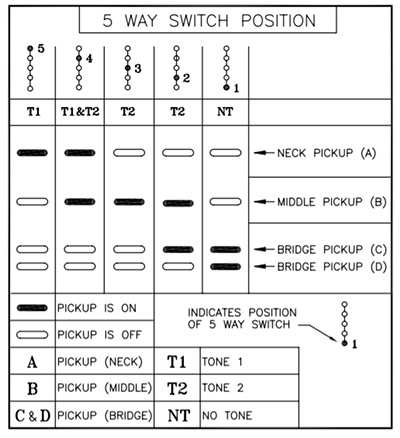 | 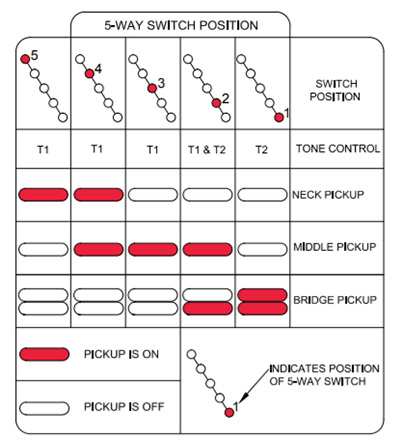 |
| Switching - for SSS | 1. Bridge Pickup, Position 2. Bridge and Middle Pickup, Position 3. Middle Pickup, Position 4. Middle and Neck Pickup, Position 5. Neck Pickup | 1. Bridge Pickup, Position 2. Bridge and Middle Pickup, Position 3. Middle Pickup, Position 4. Middle and Neck Pickup, Position 5. Neck Pickup |
| Hardware | ||
| Bridge | 6-Saddle Vintage-Style Synchronized Tremolo | 2-Point Synchronized Tremolo with Bent Steel Saddles |
| Hardware Finish | Chrome | Nickel/Chrome |
| Tuning Machines | Standard Cast/Sealed | Standard Cast/Sealed |
| Pickguard | 3-Ply Parchment | 3-Ply Parchment |
| Control Knobs | White Plastic | Parchment Plastic |
| Switch Tip | Parchment | Parchment |
| Neck Plate | 4-Bolt Standard | 4-Bolt with "F" Logo |
| Miscellaneous | ||
| Strings | Fender® USA Bullets® 3250L, NPS, (.009-.042 Gauges) | Fender® USA 250L Nickel-Plated Steel (.009-.042 Gauges) |
| Accessories | ||
| Case/Gig Bag | None | None |
According to these side-by-side specs, the vibe of the instrument is not that different from a previous version if you consider neck profile, body shape, scale length, etc. So I strongly believe you would have a similar playing sensation with the Fender Player Stratocasters.
I hope it’s been an insightful article for you to compare how many changes have been made to Mexico-made Strats. I would highly recommend you check out the HSS or SSS versions of Fender Player Strats at Thomann, with other fingerboard options as well as bundled versions that feature a gig bag with the guitar! 
Pricing & Availability
As mentioned, if you are looking for the previous generation, made-in-Mexico, standard Stratocasters, you should check out the Player II series. Fender offers so many variations under this series, but it’s pretty much what replaced the original Standard Stratocaster series. If you want to save even further, you can also check out the current Standard Stratocasters, which are made in Indonesia (by Cort factories). But note that the experience I have shared here is only about the previous Standard Stratocasters series, which were made in Mexico back in the day.
Check out Fender Player series Stratocasters here on Thomann
You can also check out the used Standard Stratocasters, which were made from 2013 to 2016, on Reverb.
Check out Fender Standard Stratocasters (made in Mexico) here on Reverb
Last but not least, you may want to check out Amazon, as the most current line of Player II series Stratocasters is available over there!
Check out Fender Player series Stratocasters here on Amazon
Thanks for visiting my blog and supporting me so far! I will hopefully see you in the next review here!